
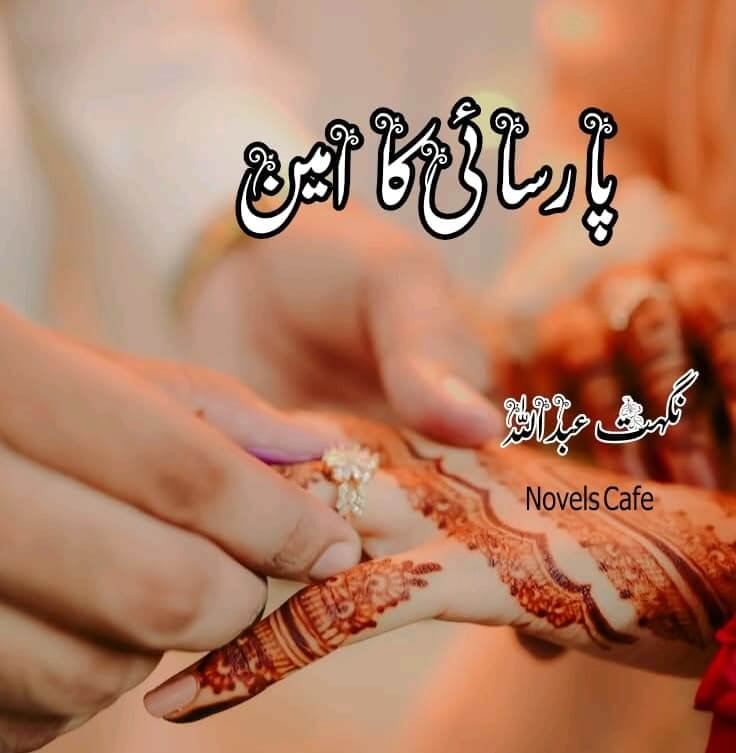
A Factory Owner’s Doorway: Reading Nighat Abdullah’s Parsai Ka Ameen
Ramla’s father works in a factory and looks after his daughter on his own. Her mother is already gone, so the home they share depends on one person and one workplace. Parsai Ka Ameen, written by Nighat Abdullah and published in Khawatan Digest in June 2018, begins from this ordinary, fragile arrangement. It then shows how quickly such an arrangement can give way.
One Household, One Pillar
Ramla has already lost her mother when the story opens, so her father is not simply a parent. He is the person who works, provides and cares for her. The novel is a short family story, and it does not need many characters to show how much a young woman can rely on a single relative.
She is also engaged to her cousin, who lives abroad with his parents. From the start, then, her future looks settled. Her family has arranged it, and it is happening at a distance.
Then her father dies in an accident. The novel does not present this as a plot device alone. It marks the moment when both of her parents are gone, and the story names her state plainly: she feels helpless. That restraint suits the tone of the whole piece. The loss changes the direction of her life without being inflated into spectacle.
What Protection Looks Like When No One Else Is Nearby
Her father worked at the factory, so the factory owner, Shaheer Hassan, is connected to her life through that work. Ramla’s engagement ties her to a family overseas, but it has not given her the immediate, practical shelter she now needs.
Shaheer Hassan is described as serious, influential and responsible. He chooses not to leave her alone and brings her to his home so that she can receive support and protection. The novel does not ask the reader to treat this as a small gesture, and it is the hinge on which everything else turns.
It is worth being careful about what the story tells us here. The stated reason is support and protection, and that is where a responsible reading should stay. What the decision does is move Ramla from isolation into a household, and the story’s “series of relationships, emotions and changing situations” begins from that move.
Responsibility Before Romance
A conventional romance would likely open with attraction. This novel opens with obligation. Shaheer Hassan’s first significant act in Ramla’s life is a protective one, taken at the moment she is most exposed.
That ordering shapes how the later relationship can be understood. Whatever develops between them grows out of a situation in which one person has taken on responsibility for another. Readers who are drawn to stories where care comes before feeling will find that structure in Parsai Ka Ameen. Because the summary says little beyond his role and his decision, the reader is left to think about what that responsibility might mean without being handed a ready answer.
The Quiet Weight of an Age Difference
The age difference is one of the novel’s defining features, and the story treats it with some care. It does not present the gap as an obstacle to be dramatically overcome or as a detail to be ignored. Instead, what makes the relationship distinctive is the understanding, respect and acceptance that gradually develop between Ramla and Shaheer Hassan.
Those three words are worth taking seriously. Understanding suggests the two come to know each other. Respect suggests a relationship that does not run only in one direction. Acceptance suggests a settling over time rather than a sudden turn. The word “gradually” matters too, because it points to a process rather than an event.
For readers of age-difference fiction, this is where the novel’s interest lies. It is less about the numbers than about whether two people in unequal positions can find a footing that feels fair to both. The story’s answer arrives through the happy ending, but the path matters more than the destination.
A Promise Made Before the Loss
One of the novel’s quieter tensions is Ramla’s engagement. It was settled before her father’s death, when her life looked stable. Her cousin lives abroad with his parents, and that distance is part of her situation. Her circumstances have changed completely, but the engagement is still there.
The story asks directly what will happen to this previously arranged relationship as her circumstances change. It is a fair question, and the novel treats it as a real one. An engagement is a commitment made by a family, and when the family structure around it collapses, that commitment does not disappear. It simply becomes less certain.
Readers should not expect this review to say how that question is resolved. What can be said is that it gives the story a second line of tension. Ramla is not only moving into an unfamiliar home. She is also carrying an earlier promise about her future into circumstances nobody planned for.
Family as Shelter and as Question
The novel is labelled a family-based story, and the label fits. Ramla’s life is defined by who surrounds her: a mother she has lost, a father who raised her, a cousin and his parents abroad, and a household she is brought into. Each of these relationships carries a different kind of weight.
What changes in the story is where family support actually comes from. The arranged family is far away, and the immediate protection comes from someone whose connection to her began at her father’s workplace. The novel invites readers to think about what it means to be sheltered by people outside the expected circle, and what that shelter might lead to.
Why the Story Holds Its Place
Parsai Ka Ameen is a short and simple story, and its appeal lies in that simplicity. It does not rely on an elaborate plot. It builds on a young woman’s loss, a responsible man’s decision, an age gap that is met with respect, and an engagement that raises an open question.
For readers who enjoy boss-hero fiction, the factory owner and the protective decision will be familiar ground, yet the emphasis on responsibility gives the setup a more serious footing than usual. For those who prefer family-centred stories, the focus on support, loss and changing circumstances offers plenty to reflect on. And for anyone wary of sadness without relief, the novel closes with a happy ending.
Where a Sheltered Life Leads
The summary ends with a question about whether this new journey will lead Ramla to her destination. The title, Parsai Ka Ameen, points toward trust and safekeeping, and the story’s central act is one of safekeeping. Ramla begins as someone who has lost her closest support and ends in a story that reaches a happy conclusion. The pages between those points, and the way her protector and her earlier engagement shape them, are what make Nighat Abdullah’s story worth reading.