
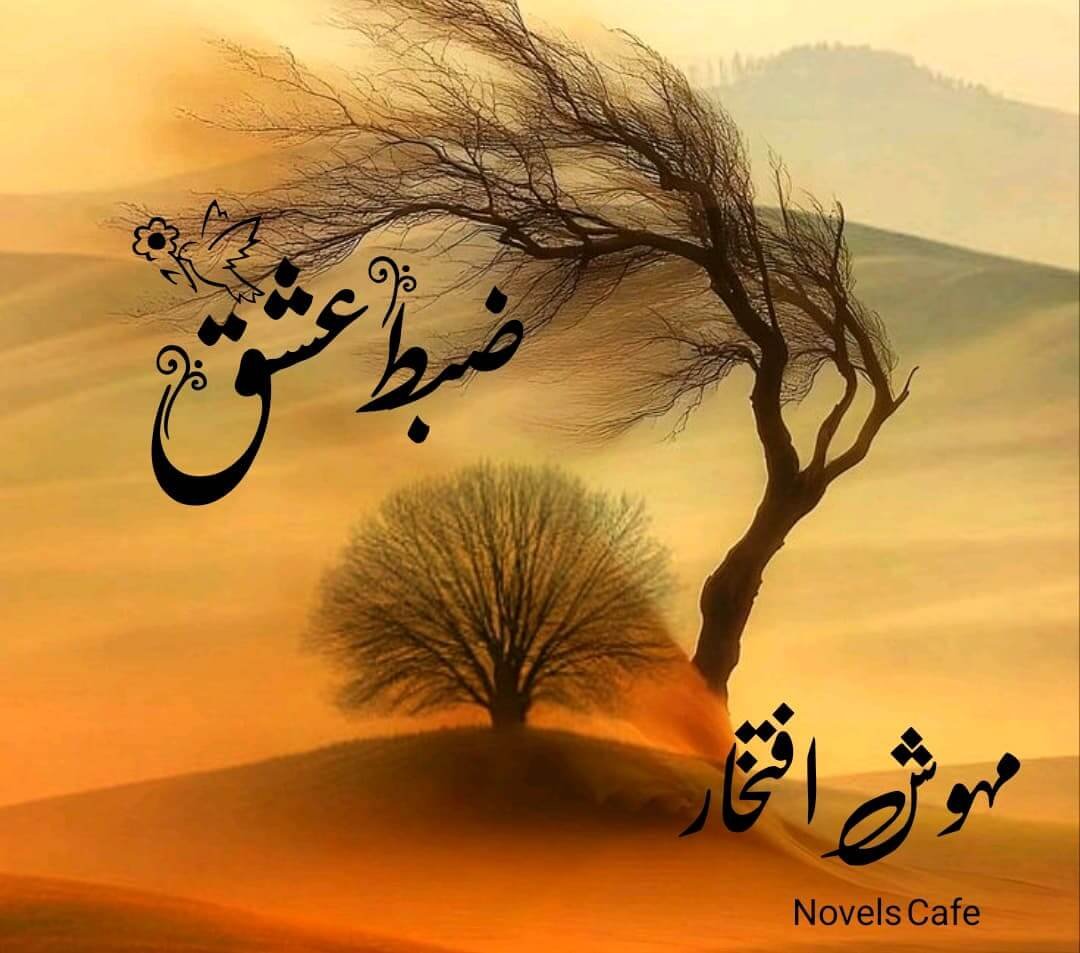
When a Father’s Ego Decides a Marriage: Zabt E Ishq by Mehwish Iftikhar
Some novels begin with a meeting. Zabt E Ishq begins, in effect, with a wound. Mehwish Iftikhar’s novel, published in Shuaa Digest in the January and February 2012 issues, is concerned less with how a couple comes together than with what remains after they are forced apart. At 69 pages, it is a compact, complete novel, and it makes good use of that length by keeping its attention on feeling rather than on incident.
Three Names, One Knot
The story rests on three people: Raina Hayat, Shah Nawaz and Alam Ghiyas. The author does not give each of them a separate storyline that occasionally crosses the others. She ties them into a single emotional knot. Shah Nawaz brings love, Alam brings friendship, and Raina brings hatred. Each of these feelings pulls against the others, and the novel’s tension comes from watching them collide.
This is why Zabt E Ishq reads as an emotional drama rather than a conventional plot-driven romance. The conflict does not come from a villain in the usual sense. It comes from feelings that are real, justified in their own way, and impossible to reconcile.
A Marriage That Was Never Allowed to Settle
Shah Nawaz marries Raina, the daughter of his father’s friend. On paper, this is the kind of match that families approve of and expect to last. But serious complications arise within the family, and before leaving, Shah Nawaz’s father compels his son to divorce Raina.
The novel is built on this moment, and it is worth noticing how much it says about the family structures that Urdu digest fiction so often examines. The divorce is not the result of a quarrel between husband and wife. It is imposed from above. The decision belongs to a father, and its consequences fall on two people who had no real say in it. Shah Nawaz’s happiness, as the story presents it, becomes a casualty of his father’s stubbornness and ego.
For readers who enjoy after-marriage stories, this is the genre’s central question in a sharper form. What happens to a relationship when its ending is decided by someone else? And what happens to the people left to live with that decision?
Love That Carries Guilt
Shah Nawaz is not presented as a man who stopped caring. He loves Raina deeply, and that love is exactly what makes his position painful. He holds himself responsible for the ruin of her life. His affection has not faded; it has turned into a burden.
This is a more interesting emotional state than simple heartbreak. Love that is mixed with guilt is restless. It wants to repair something that may not be repairable. The title itself, Zabt E Ishq, which roughly suggests restraint or control over love, seems to point toward this inner struggle: a feeling kept in check because it has no safe place to go.
Raina’s Hatred and the Question of Cowardice
On the other side stands Raina, and her response is anything but gentle. She hates Shah Nawaz. According to the novel, her anger is tied to what she sees as his cowardice, his failure to stand firm when the decision that broke their marriage was made.
The contrast between the two is what gives the novel its emotional force. He sees himself as someone who has wronged her. She sees him as someone who did not fight for her. Both readings are painful, and neither can easily cancel the other out. The reader is left holding two sincere perspectives at once, which is a harder thing for a story to do than choosing a side.
Hatred in fiction is often a disguised form of hurt, and the novel’s description suggests that Raina’s resentment grows out of a real injury. Her anger deserves to be taken seriously as a response to what happened to her, not dismissed as bitterness.
Alam Ghiyas and the Weight of Friendship
If Shah Nawaz and Raina represent love and hatred, Alam represents the quieter force of loyalty. He and Shah Nawaz are close friends, and the divorce damages that bond too. A friendship that had lasted for years does not survive the separation untouched.
Yet it is in these difficult circumstances that Alam’s friendship becomes particularly important. This is a thoughtful choice by the author. Many family stories treat friendship as background. Here it is a real pillar of the narrative, something that matters most precisely when relationships are under strain. Alam’s role gives the novel a human warmth that balances its heavier themes of ego and resentment.
Quetta and Islamabad as Emotional Backdrops
The novel is also known for its descriptions of Quetta and Islamabad, which draw the reader in from the opening pages. Setting is easy to overlook in a story so focused on inner feeling, but these two cities help shape the atmosphere in which the characters live and suffer. Good descriptive writing makes an emotional story feel grounded, and the evocative picture of these places is one of the elements that gives Zabt E Ishq its distinct texture.
The Sacrifice Readers Must Discover
At the heart of the novel’s suspense is a decision Shah Nawaz makes for Raina’s comfortable and peaceful future. He makes a significant sacrifice, and the nature of it is one of the story’s central mysteries. It would be unfair to reveal it here. What can be said is that it gives his love a form that words alone could not, and it invites the reader to reconsider the man Raina has judged so harshly.
The suspense works because it is emotional rather than sensational. We do not wait to learn who did what; we wait to learn how deeply one person was willing to give up something for another, and whether that gesture can change the way he is seen.
What Stays With the Reader
The novel is remembered for its emotional depth, its engaging storyline and its happy ending. That ending matters. Stories about forced separation can easily leave readers heavy-hearted, and the promise of a hopeful resolution is part of what makes Zabt E Ishq satisfying rather than merely sorrowful.
What remains after reading is a quiet argument about responsibility. A father’s pride can rearrange the lives of others in a single decision, but love, friendship and sacrifice can still find a way to answer it. For readers who value family stories with real emotional weight, Mehwish Iftikhar’s Zabt E Ishq from Shuaa Digest is a thoughtful, memorable read, one that rewards patience and leaves its most important revelation for those willing to turn the pages themselves.