The Legacy of Aik Baar Muskura Do in Urdu Digest History
Azka sets a plate down in front of Ashab and waits, anticipating the criticism she knows is coming. That small, repeated moment of bracing is the engine of Aik Baar Muskura Do, a short novel that asks what a woman owes a husband who gives her nothing warm in return. The title itself is a plea: smile, just once.
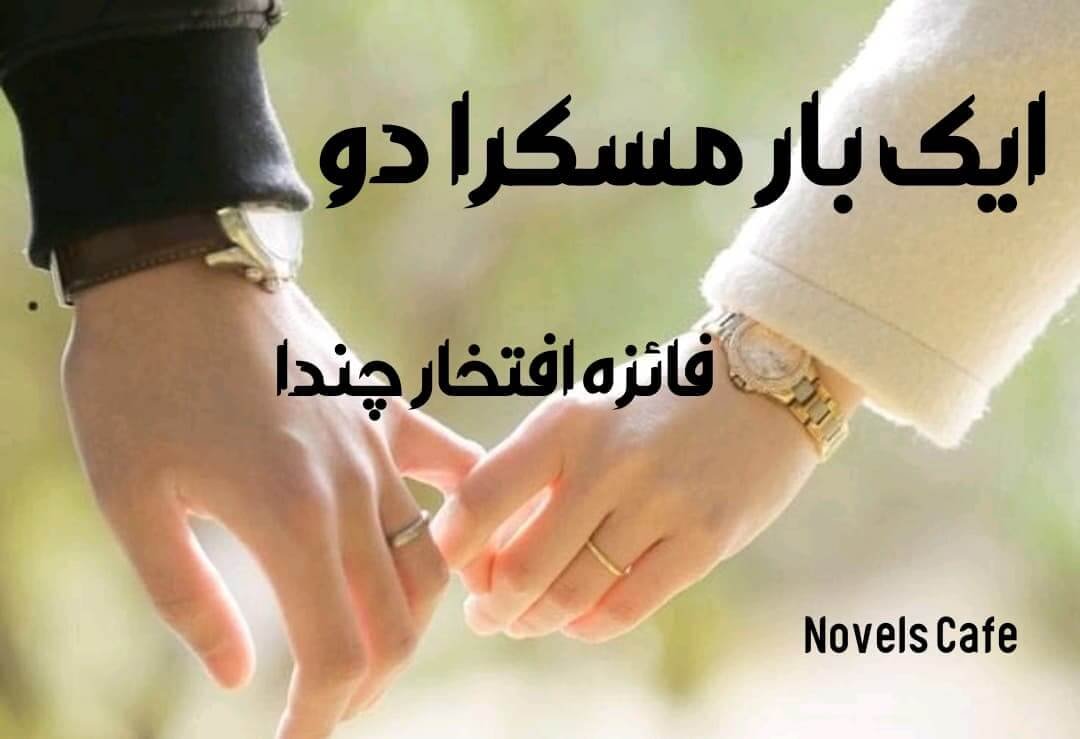
Publication details: Aik Baar Muskura Do by Faiza Iftikhar first appeared in the August 2002 issue of Khawateen Digest, running 25 pages in the family fiction and after-marriage category.
Readers who grew up waiting for the monthly digest to arrive at the neighborhood book stall will recognize the texture of this story immediately — the domestic close-up, the unspoken tally of small wounds, the refusal to simplify a bad marriage with a single apology. It is worth revisiting for how early Iftikhar explored themes that would define her career: the cost of a woman’s patience, and who benefits from it.
Novel Overview And Publication Details
Novel: Aik Bar Muskura Do
Writer: Faiza Iftikhar Chanda
Published in: Khwateen Digest August 2002
Status: Complete Novel
Pages:25
Genre: After Marriage ❤️| Family Based
File Format: Pdf (Online)
💞 This is an interesting family story based on life after marriage, domestic relations and small complications that arise in relationships.
Azka is married to Ashab, but after marriage she has to face her husband’s bitter temper and critical attitude. Ashab does not particularly like the frankness of Azka’s family, their humor and mutual love. Even the slightest thing from the family is unpleasant to him and he always raises some objection in every matter. 😅
On the other hand, Ashab’s sister is also not happy in her married life, but she takes out her anger on Azka for the problems and bitterness of her in-laws. Thus, Azka has to deal with her husband’s temper on one hand, and on the other hand, she also has to endure the bitterness of other relationships in the family.
Now let’s see how Azka faces all these situations with her intelligence and cheerfulness and will she be able to bring back the colors of happiness in her home environment? 🌷
The style of the story is interesting, there is also a domestic twist and the beauty of relationships. The best thing is its happy ending. ❤️
My opinion: A good piece of writing for readers who are keen on reading light, interesting and happy family stories. A must read! 🥰🌹
Azka and Ashab: A Study in Marital Friction and Emotional Labor
Azka is not portrayed as a melodramatic victim. She is competent, observant, and entirely aware of the dynamic she lives inside. What the novel captures so precisely is the exhaustion of managing another person’s moods as an unpaid, unacknowledged job — anticipating Ashab’s irritation, softening her own tone before he can object to it, absorbing criticism so the household stays quiet. This is emotional labor rendered as daily routine rather than high drama.
Ashab, for his part, is drawn with more care than the genre usually permits. His bitterness is not arbitrary; it is shaped by his history, and Iftikhar is patient enough to let the reader see the frightened man underneath the sharp tongue. He dislikes, criticizes, withholds — and is baffled when Azka’s warmth does not simply appear on command.
The cruelty in their marriage is subtle. It lives in the pause before a reply, in the compliment that never comes, in a woman arranging her face before she walks into a room.
That restraint is what elevates the book. The friction is cumulative, not explosive, and Azka’s endurance is presented as costly rather than noble.
Faiza Iftikhar’s Literary Journey from Page to Screen
Viewers who know Faiza Iftikhar from television often encounter her work backward — the drama first, the digest fiction later. The continuity between the two is striking. Her screenwriting carries the same instincts visible in her early short novels: ordinary households as the primary setting, dialogue that does the heavy lifting, and conflicts that come from social expectation rather than contrived villainy.
What the move to screen changed was scale, not sensibility. A digest novel gives a writer twenty-five pages and an audience already fluent in the conventions; a serial gives her dozens of episodes and an audience that includes people who have never read a digest in their lives. Iftikhar carried the same preoccupations into both:
Short family fiction and after-marriage stories published across Pakistan’s major monthly digests
Longer serialized novels developed for digest readerships over multiple issues
Television scripts built around domestic negotiation, class friction, and women’s interior lives
For students tracing the literary origins of Pakistani screenwriters, the digest archive is the primary source — and faiza iftikhar novels from the early 2000s are where the voice is still forming in public, issue by issue.
Why After-Marriage Fiction Resonates with Urdu Readers
Most romance ends at the wedding. Urdu family fiction after marriage begins there, and that single structural choice explains its hold on readers. The wedding is not the resolution of a woman’s story in most South Asian households — it is the point at which negotiation actually starts, with in-laws, with household authority, with a man she may barely know.
This genre gives readers a vocabulary for things rarely said aloud. Seeing Azka’s resentment named on the page, without the narrative punishing her for feeling it, is a quiet form of validation for anyone who has run the same calculations in their own home.
The conventions recur because they map onto lived experience:
The withholding husband — a man whose coldness is presented as temperament rather than choice, and whose eventual softening is earned slowly or not at all.
The patient wife under scrutiny — a protagonist judged by relatives and neighbors for a marriage she did not design.
The domestic interior as battleground — kitchens, bedrooms, and shared courtyards standing in for the larger social forces pressing on both characters.
What distinguishes the better entries, this novel included, is whether patience is celebrated or examined.
Key Takeaways: What Makes This Novel a Must Read
For readers weighing whether to spend an afternoon with this story, here is what an Aik Baar Muskura Do novel review comes down to.
It treats emotional labor as the central plot, not background texture. Azka’s work of managing Ashab’s temper is given the narrative weight usually reserved for external obstacles, which is unusual for the period.
Ashab is written as a person rather than an obstacle. His bitterness has an internal logic, and the novel is more interested in understanding it than in simply condemning him — a choice that keeps the marriage believable.
The 25-page length is a feature. Nothing is padded. The conflict is established, pressed, and turned within a single reading session, which is exactly why it has survived in digital circulation.
It previews the concerns of Faiza Iftikhar’s later screen work. The domestic setting, the friction driven by dialogue, and the skepticism toward a woman’s endless patience all appear here first, in compressed form.
Read it as a short novel, or read it as an early sketch of a writer working out what she wanted to say about marriage.