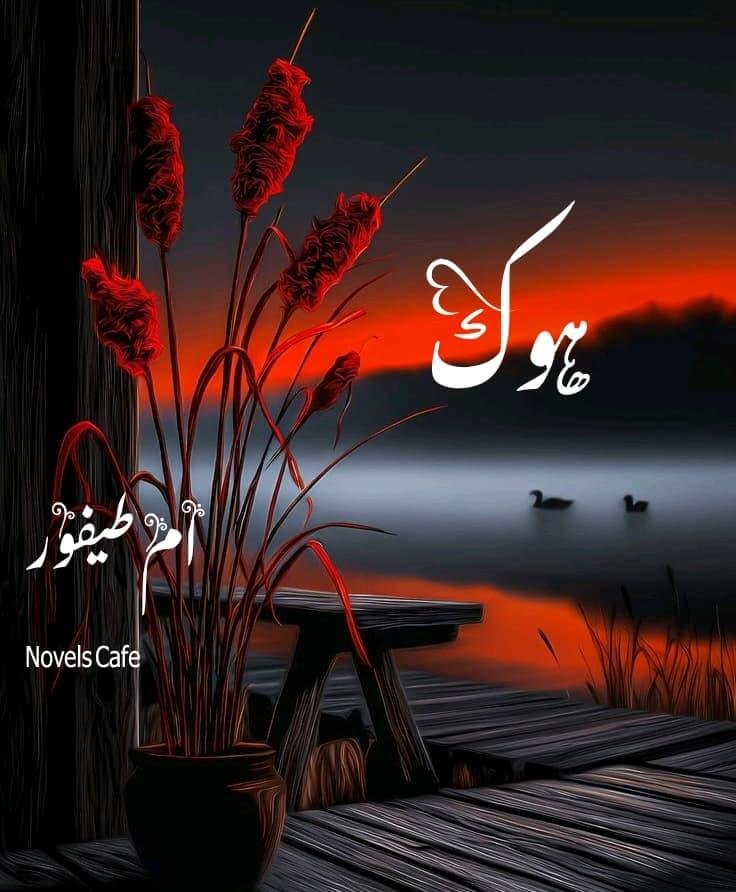

A Nomad Among Lecture Halls: Reading Banjara Hoon by Memoona Sadaf
Most university stories begin with a meeting between two students and let the campus supply the rest: corridors, classrooms, a slow drift toward romance. Banjara Hoon, a 28-page story by Memoona Sadaf published in the September 2025 issue of Khawateen Digest, uses the university differently. Here the campus is a place where ideas collide, and the central question is less “Will they end up together?” than “What kind of life is worth choosing?”
Two Ways of Standing in the World
The story rests on a contrast between Musab and Mishkwat, and the contrast is deliberate.
Musab is a young man with independent, even revolutionary ideas. He does not measure his life by the usual yardsticks of social approval, and he declines the restrictions that tradition places on how a person should live.
He calls himself a Banjara, a wanderer, and the word is a statement of philosophy. A nomad owns little, belongs to no fixed address, and answers to no one’s definition of success. By choosing that word for himself, Musab claims an identity built on freedom rather than inheritance.
Mishkwat comes from the opposite direction. She belongs to a wealthy family and has grown up in comfort and luxury, and she has never had to ask whether her way of living was her own choice. Her world was arranged for her, and it was arranged generously. At the outset, her outlook and Musab’s have almost nothing in common.
The pairing is effective because neither position is a caricature in the story’s framework. Musab is not simply a rebel and Mishkwat is not simply a pampered girl. Each is the product of a particular environment, and the story invites readers to see how environment shapes what a person considers normal.
When an Idea Travels from One Mind to Another
The most interesting movement in Banjara Hoon is internal. As Mishkwat gets to know Musab, his ideas begin to reach her. The story does not present this as a sudden conversion. It describes a gradual influence, and that gradualness matters, because it reflects how thinking really changes. Few people are persuaded by a single argument. More often, a different way of seeing sits beside us for long enough that our own assumptions start to look unfamiliar.
Under that influence, Mishkwat begins to question her artificial, comfort-oriented lifestyle. The word “artificial” carries weight here. The story suggests that a life organized entirely around ease can feel curated rather than lived. From this doubt grows a new interest in simplicity, in nature, and in personal freedom. These three attractions are connected: nature offers an alternative to manufactured comfort, simplicity offers an alternative to accumulation, and freedom is the principle that holds both together.
This is the story’s quiet argument about relationships. The people we spend time with do not only occupy our days; they alter the vocabulary in which we think. Mishkwat’s change comes through knowing someone whose life asks different questions than her own.
Comfort Versus Contentment
A central tension in the story is the difference between material comfort and inner happiness. Mishkwat’s life has never lacked the first, yet her growing restlessness suggests that it did not guarantee the second. The story does not condemn wealth, and nothing in the available information suggests it treats comfort as shameful. What it explores is the possibility that a person can be thoroughly looked after and still feel distant from her own life.
Musab’s philosophy supplies the counterweight. His independence is not framed as deprivation but as a different source of satisfaction, one rooted in thought, nature, and self-direction rather than in possessions. Readers are left to weigh the two views for themselves, which is where the story gains its depth. It poses the question without turning it into a lecture.
The First Time She Hears “No”
One of the more telling details is that Mishkwat’s parents have always fulfilled her wishes. Until now, her desires and her family’s willingness to meet them have moved in the same direction. When she decides to adopt a different way of living, that harmony breaks, and her parents oppose her. For the first time, she experiences resistance from her own family.
This turn is significant. It shows that the support Mishkwat enjoyed was real but conditional: it held firmly as long as her wishes fit the life her family had imagined for her. Once she steps outside that picture, the generosity gives way to opposition. The moment tests whether her new convictions are strong enough to survive disapproval from the people closest to her. Freedom, the story implies, is easy to admire in principle and much harder to practice when it costs something.
A Choice with Three Strands
Mishkwat’s dilemma has several layers, and the story keeps them intertwined. She must decide whether to choose a simpler life, whether to follow her growing feelings for Musab, and whether to claim the freedom to make her own decisions. These are related questions but not identical ones. A simple life could be chosen without Musab; feelings for Musab could exist without a changed lifestyle; and the right to decide for herself is the foundation beneath both.
That separation is what distinguishes the story from a conventional campus romance. In the usual formula, the relationship is the goal and everything else serves it. Here the emotional connection is one thread among several, and it is entangled with a larger matter of identity. Whether Mishkwat finds the life she desires, and whether Musab becomes part of her journey, are questions the story answers itself, so this article leaves them unspoiled.
Where the Road Leads
Banjara Hoon is best read as a short study of how a life changes direction: through an encounter with another mind, through a growing dissatisfaction with the ready-made, and through the discomfort of disagreeing with those who love us. Memoona Sadaf builds the story on a simple opposition, a wanderer and a girl raised in comfort, and lets that opposition raise questions many readers will recognize from their own student years or family lives.
Its title suggests the final point. A banjara is defined by the road rather than the destination, and the story seems less concerned with arriving at a verdict than with the courage it takes to begin walking. For readers who want a university story that treats thought as seriously as romance, Banjara Hoon offers a compact and reflective choice.