Two Unsettled Homes Before Any Wedding
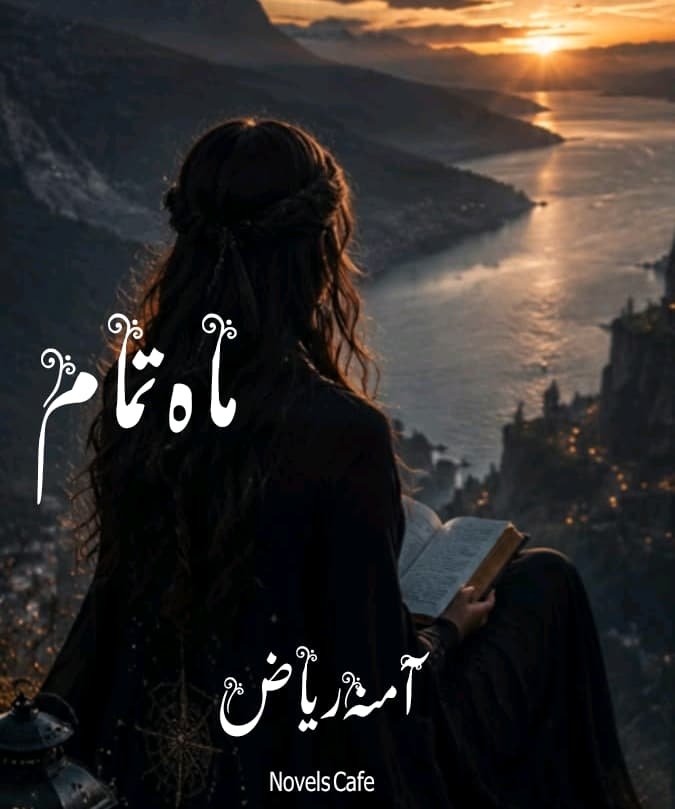
Most readers who search for Mah-e-Tamam by Amna Riaz expect a story about an emergency marriage. The marriage is there, but it is not where the novel begins. Before it, the Mah-e-Tamam Urdu novel spends its energy on two households where something is already out of balance: one where a son and father cannot speak without quarrelling, and one where a sister and brother are drifting apart after a marriage. The wedding is what happens when these two disturbances meet.
Published in Khwateen Digest in April 2013, the novel belongs to the family-based Urdu fiction that digest readers know well. It is more interested in how people wear each other down, and slowly repair things, than in sudden gestures.
Taqi and the Cost of Being Carefree
Taqi is introduced as a carefree young man, and his relationship with his father is the first strain in the story. They argue often and rarely agree. The novel does not present this as a simple case of a rebellious son and a strict parent. Two people who cannot find a common language end up repeating the same quarrel.
That is what makes the conflict between personal independence and parental expectations believable. A father who wants his son to take a particular direction, and a son who resists simply because it is being demanded of him, can both be partly right and still hurt each other. Taqi’s carefree nature reads less like a virtue than like a way of avoiding a conversation he does not expect to win.
When Showbiz Becomes the Breaking Point
Taqi’s entry into the showbiz world is the moment the old friction becomes a rupture. When his father finds out, he is angry and throws Taqi out of the house. After that, Taqi lives with relatives.
Here the novel shows how one decision can reshape a person’s circumstances. Taqi loses his home and also the certainty of belonging somewhere. Living among relatives matters later, because those family ties are what connect him to the heroine’s household. His exile from one family places him inside the network of another.
The Heroine Who Misreads Her Own Home
The heroine’s story begins in grief. She loses her parents and is raised by her brother, who becomes the centre of her emotional world. It is easy to understand why his marriage unsettles her. For her, the arrival of a sister-in-law may feel like a loss of the only security she has had.
She responds by creating misunderstandings and trying to turn her brother against his wife. The novel does not let this pass as simple villainy. A girl who has already lost her parents is afraid of losing her brother too, and her fear turns into harm. The reader can disapprove of what she does while still seeing where it comes from.
An Apology That Does Not Settle Everything
The heroine realises her mistake and apologises to her sister-in-law. In many stories, an apology would close the matter. In Mah-e-Tamm, the sister-in-law’s resentment does not disappear.
This is one of the more mature choices in the novel. It suggests that forgiveness cannot be switched on by a confession, and that a wounded person may need more time than the one who caused the wound would like. The heroine’s change of heart is sincere, but sincerity does not erase what has already happened. The novel leaves that unfinished feeling in place, and it matters when the accusation arrives.
How the Accusation Draws Two Families Together
The turning point comes when Taqi, who is related to the heroine’s sister-in-law, becomes involved in an accusation concerning both himself and the heroine. The novel’s setup does the work here. A sister-in-law who still carries resentment, a heroine who has already damaged trust in her own home, and a young man separated from his father all stand in the same family circle when the crisis comes.
What follows is the emergency marriage: Taqi suddenly marries the heroine and brings her to his home. Within the novel, this is the result of earlier tensions, not an isolated accident. It is a decision made under pressure, which gives the relationship a difficult beginning. Marriages that start as a response to a crisis are not built on mutual choice, and the novel treats that seriously.
Marriage as a Beginning, Not an Ending
The story continues after the marriage, and this is where the after marriage Urdu novel element comes in. The two have to learn to live with each other inside a household that is new to the heroine, and that carries its own expectations. Taqi, who left one home on bad terms, now has to build another. The heroine, who tried to disturb her brother’s marriage, now has to make her own work.
There is a quiet irony in this. The girl who once treated a sister-in-law as a threat has to become a daughter-in-law and a wife herself. The novel uses this to explore delicate family relationships, emotional conflict and, gradually, love. It does not claim that affection arrives instantly. It lets feeling develop through ordinary contact and the slow business of trust.
The novel does reach a happy ending. It also keeps the family dynamics at the front throughout, so the ending feels like the settling of several relationships and not only of a romance.
A Drama Adaptation and the Original Story
A drama has also been made from the novel. Those who know the screen version may find it useful to return to the written story, because the fiction gives its quieter moments room: the resentment that does not fade, the apology that does not heal at once, the father and son who never quite learn to talk.
What a Family Asks of Those Who Enter It
Mah-e-Tamm is at its strongest when it looks at what families demand from their members and what they are slow to give back. A father withholds approval, a brother’s household has no easy place for a grieving sister, and a wronged wife holds on to her hurt. Against that background, the emergency marriage becomes a test of whether two people can build something steadier than the circumstances that joined them.
For readers of Amna Riaz novels, and for anyone looking for a family based Urdu novel where relationships change slowly and apologies have limits, this April 2013 Khawateen Digest story offers more than its central twist suggests. The question it leaves is not whether the couple will marry, but whether the people around them will learn to forgive.