
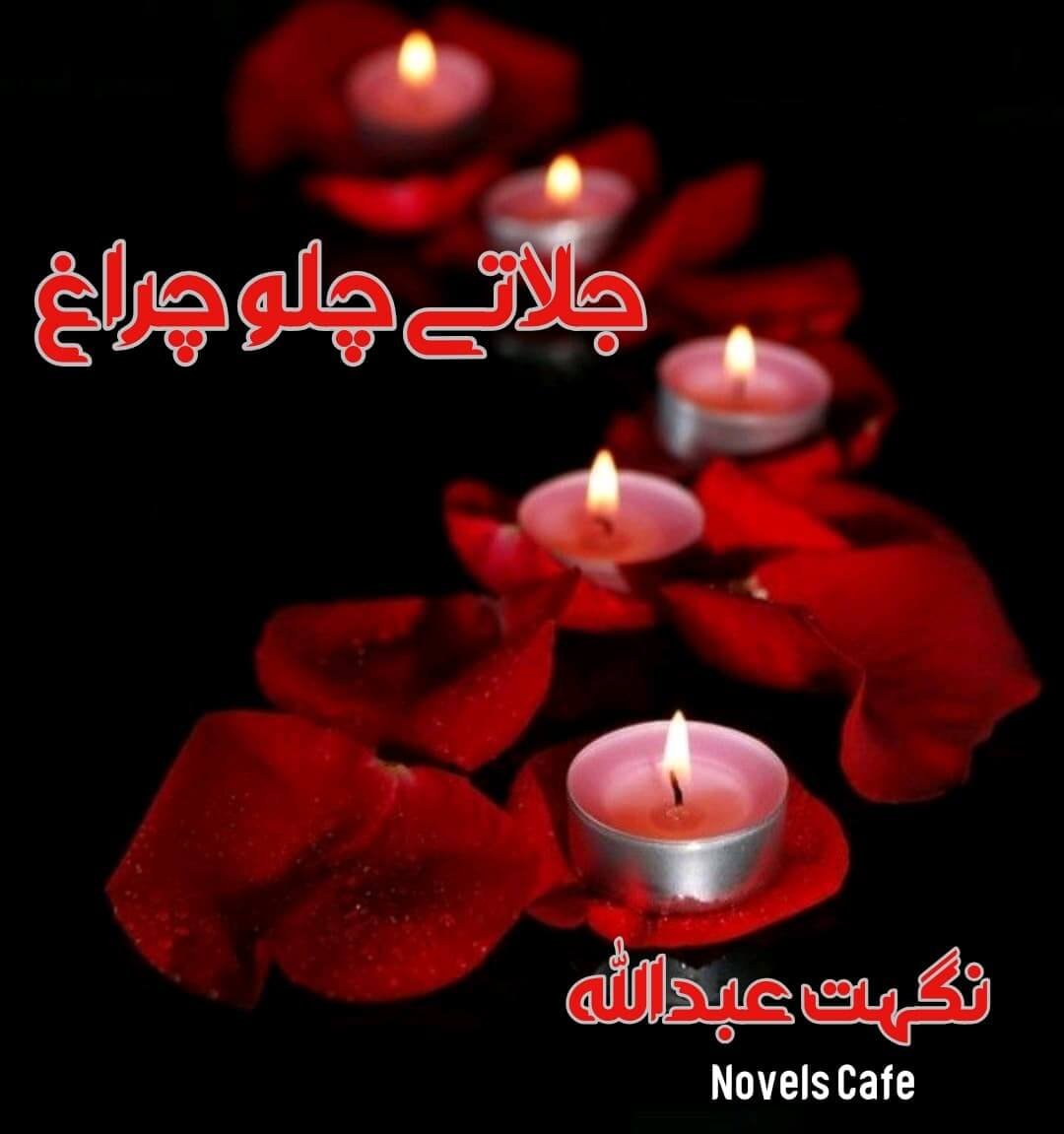
When a Lamp Is Lit in the Dark: Nighat Abdullah’s Jalate Chalo Chirag
Some novels begin with a wound rather than an event. In Jalate Chalo Chirag, a story by Nighat Abdullah published in Shua Digest in October 1994, the wound is abandonment. A father leaves for a foreign country, builds a new life with another wife, and lets his first family slip out of his memory. Everything that follows grows out of that silence.
The Daughter Who Was Left Behind
Rabhi is the daughter of that forgotten household. Her father’s absence is not dramatic; he does not storm out or declare anything. He simply stops being present, and the story treats that quiet withdrawal as a cruelty of its own. Children raised in such homes often learn early that stability can vanish without warning. For Rabhi, the loss of a father becomes the backdrop against which her mother’s choices and her own fragility are set.
Her mother does not collapse under the abandonment. She opens a marriage bureau, turning a personal betrayal into a livelihood built on arranging other people’s unions. There is a thoughtful irony here. A woman whose own marriage failed becomes someone others trust to find them a spouse, and that position carries a responsibility the story will test.
A Marriage Arranged, a Revenge Prepared
The novel’s central conflict begins with a match that should never have been made. Rabhi’s mother arranges the marriage of Asif Jah’s sister to a man who is already married. The consequences are not limited to one woman’s unhappiness; they reach outward into another family’s grief and anger.
Asif Jah answers that wrong with a calculated one. He marries Rabhi, using a marriage, the very thing his sister was cheated through, as the instrument of his revenge. This is the novel’s sharpest idea. Revenge here does not take the form of a fight or an open confrontation. It takes the form of an institution meant to protect and bind people, turned into a weapon. Rabhi, who had no part in the decision that hurt his sister, becomes the person who pays for it.
It is worth noticing how the story distributes blame. The mother’s act causes real harm, and Asif Jah’s response causes more. Neither side stays clean. The novel seems less interested in declaring a winner than in showing how one injury breeds the next, and how those who are least responsible often absorb the heaviest damage.
What Grief Does to a Mind
The shock of what Asif Jah has done proves too much for Rabhi’s mother, who dies. Rabhi, already shaped by a father’s desertion, is left in a state the story describes as semi-crazy: shaken, unmoored, struggling to hold herself together. Within a short span she loses her mother, her sense of safety and her trust in the people around her.
This is where the novel moves beyond a revenge plot into psychological territory. Rabhi’s condition is not a plot device but the logical outcome of accumulated loss. A girl abandoned by one parent, betrayed through a marriage, and then bereaved of the other parent has been stripped of nearly every anchor. Her fragility reads as human rather than theatrical. For readers who enjoy Urdu digest fiction for its emotional realism, this section is likely to be the heart of the book.
The Friend Who Stays
In the middle of this collapse, the story offers something steadier than romance or family: friendship. Rabhi’s sincere friend becomes her support when she has little else. The novel gives this bond real weight, and rightly so. Where blood relations and marriage have failed Rabhi, a friend who simply stays becomes the one reliable relationship in her life.
There is a quiet argument in that choice. Healing in this story does not begin with a dramatic rescue. It begins with someone being present, patiently and without conditions. Many readers will recognise how true that is, since recovery from deep hurt rarely arrives through grand gestures and more often through one person refusing to leave.
A Child, a Rented House, and a Turn in the Road
Later, a child comes into Rabhi’s life, adding a new dimension to a story that had been dominated by loss. A child gives a wounded person something to care for and a reason to look forward, and the novel uses that presence to shift its emotional direction.
The story’s next turn comes through an ordinary detail: Salman’s sister-in-law lives in a rented house that belongs to Rabhi. It is a modest connection, yet it draws a new figure into Rabhi’s world and begins to change the shape of the narrative. Salman, the hero, enters through this indirect door, which suits a novel in which important changes tend to arrive through everyday circumstances rather than grand coincidences. The details of how these threads meet are best left for readers to discover.
Why the Happy Ending Feels Earned
Despite the sorrow, the family conflict and the revenge that runs through its pages, Jalate Chalo Chirag ends happily. In a novel this heavy, that ending matters. It would be easy to dismiss a happy resolution as a convenience, but here it responds directly to the suffering that came before. A story that spends so long on abandonment, betrayal and grief owes its heroine some measure of peace, and the novel grants it.
The title itself carries that idea. A lamp lit in the dark does not erase the dark; it gives enough light to take the next step. Rabhi’s story works in much the same way. No single moment cancels her pain, but a faithful friend, a child and a changed circumstance each add a little light until the darkness no longer defines her.
Who Will Appreciate This Story
Readers who value emotional drama, flawed characters and the long consequences of one wrong decision will find a lot to engage with in Nighat Abdullah’s novel. It is a book about how harm travels from one household to another, and also about how a person can survive it. For those exploring classic Urdu digest fiction from the 1990s, Jalate Chalo Chirag is a worthwhile title that balances heartbreak with hope.