
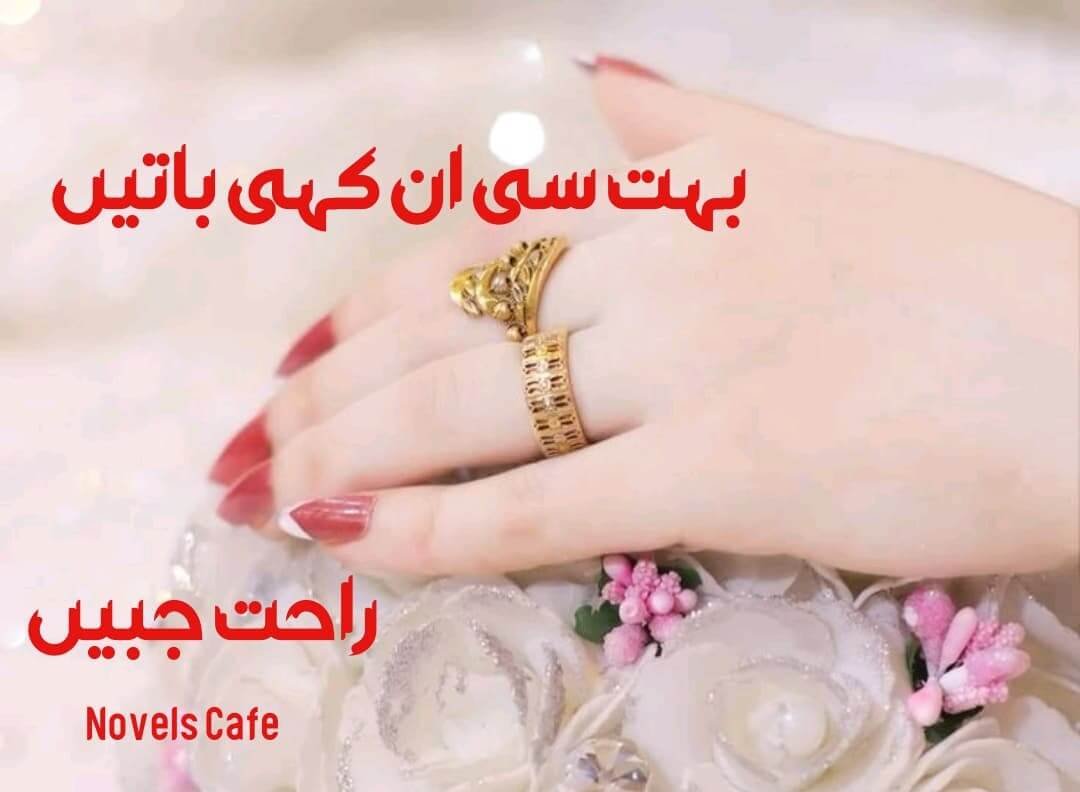
Between Silence and Belonging: Rahat Jabeen’s Bohat Si Unkahi Baten
Some family stories are loud, built on quarrels and dramatic exits. Others work in a quieter register, where the important things are felt rather than announced. Bohat Si Unkahi Baten by Rahat Jabeen, published in Shua’a Digest in June 1998, belongs to the second kind. Its title is a fair warning: much of what matters here lives in what the characters never quite say aloud.
Two Cousins, One Long Familiarity
At the center of the story are Arsalan and Maham, cousins whose connection reaches back to their childhood. The novel does not treat this bond as a sudden spark. It is an old, settled closeness, the kind that grows from years of knowing someone before you ever think to name what they mean to you. Arsalan is aware of this bond and carries a particular tenderness for Maham. That awareness gives him a quiet seriousness where she is concerned. He does not treat the relationship lightly, and the story, in turn, does not treat it as a casual romance.
This matters because it shapes the emotional temperature of the whole novel. Love between cousins who have grown up alongside one another is rarely about discovery. It is about recognition, and about what happens when two people who already understand each other must work out where they stand in a family that has its own expectations and its own history.
A Man of Books Who Chooses the Soil
Arsalan is a more interesting hero than the usual educated young man of family fiction. Despite his education, he works his family’s village lands himself, and he does so out of genuine passion for farming rather than obligation. This detail says a good deal about his character without any need for elaboration. He is not a man who treats learning as a ticket away from his roots, nor someone who sees physical work as beneath him.
That combination gives him a steadiness. A person who can hold education and agricultural labor together in one life tends to be grounded, and it is easy to see why such a character would anchor a story concerned with family values. Arsalan represents a way of living in which rootedness and refinement are not opposites. In a genre that sometimes leans on glamorous or distant male leads, his attachment to the land gives the narrative a more earthy and believable center.
Maham and the Weight of Early Loss
If Arsalan supplies the story’s stability, Maham carries its emotional vulnerability. Her childhood was spent under her father’s loving care, a detail that suggests a protected early life. Then comes loss: her mother dies while giving birth to her second child. Her father later remarries, and Maham is sent back to the family mansion.
The sequence deserves some thought. Maham’s world is first narrowed by bereavement and then rearranged by a change in her father’s household. Being sent back to the family mansion places her once more within the wider extended family, among the very people with whom her story and Arsalan’s intersect. The novel draws its emotional material from this sort of ordinary upheaval. There are no villains required to make her situation affecting; a death, a remarriage, and a change of address are enough. Readers who appreciate stories that find drama in the realistic shifts of family life will recognize the territory.
The Language of Things Left Unsaid
The title promises a story of silences, and the premise supports that reading. A girl displaced from her father’s home, a young man who understands his bond with her, a household full of relatives: these are the conditions in which feelings tend to go unspoken. Families often communicate through gestures, absences, and careful omissions, and a narrative built around such dynamics asks its readers to pay close attention.
This is where the novel’s serious and mature tone does its work. Rather than rushing toward declarations, the story keeps its focus on emotional realities, on how people carry what they feel, and on the delicate balance within family relationships. The writing keeps readers engaged by sustaining that gentle tension instead of resolving it too soon.
How Rahat Jabeen Tells It
Based on what the story offers, Rahat Jabin’s approach is restrained and dignified. The narrative stays within the domestic world, with its inheritance of land, its family mansion, and its relationships shaped by blood and circumstance, and it handles these elements with seriousness rather than sensation. The themes of love and hope are woven into the family setting instead of being set apart from it.
The tone is the most noticeable feature of the storytelling. It is mature without being cold, and emotional without leaning on melodrama. Digest fiction of this kind often succeeds or fails on whether its sentiment feels earned, and a composed, serious voice is well suited to material about grief, displacement, and quiet affection. The story also commits to a happy ending, and in a narrative built on restraint, that resolution reads as a considered conclusion to the characters’ long wait rather than a convenience.
What the Story Is About, Underneath
Beyond its two leads, the novel is concerned with what a family owes its members and how belonging is built. Maham’s return to the family mansion raises the question of what it means to have a place within a household when your original home has changed around you. Arsalan’s dedication to the village lands raises a parallel question about loyalty to roots and the dignity of work. Love, in this framework, is not only romantic feeling but also a form of care that families extend, withhold, or learn to express.
Hope runs through all of this. The story does not deny sorrow, but it does not let sorrow have the last word. That balance gives the novel a warmth that feels measured rather than sentimental.
Who Will Appreciate It
This is a book for readers who prefer emotional depth to plot-driven momentum. If you enjoy family-centered fiction where relationships develop gradually and feelings are suggested more than stated, Bohat Si Unkahi Baten offers exactly that. It suits those who value a respectful, serious tone and a story that ends on a note of fulfillment.
Readers who want fast twists, high conflict, or dramatic reversals may find its pace too gentle. But for those drawn to the quieter side of family storytelling, Rahat Jabeen’s novel from the June 1998 issue of Shua’a Digest is a thoughtful and steady read, one that takes its unspoken things seriously and, in the end, gives them somewhere to go.