
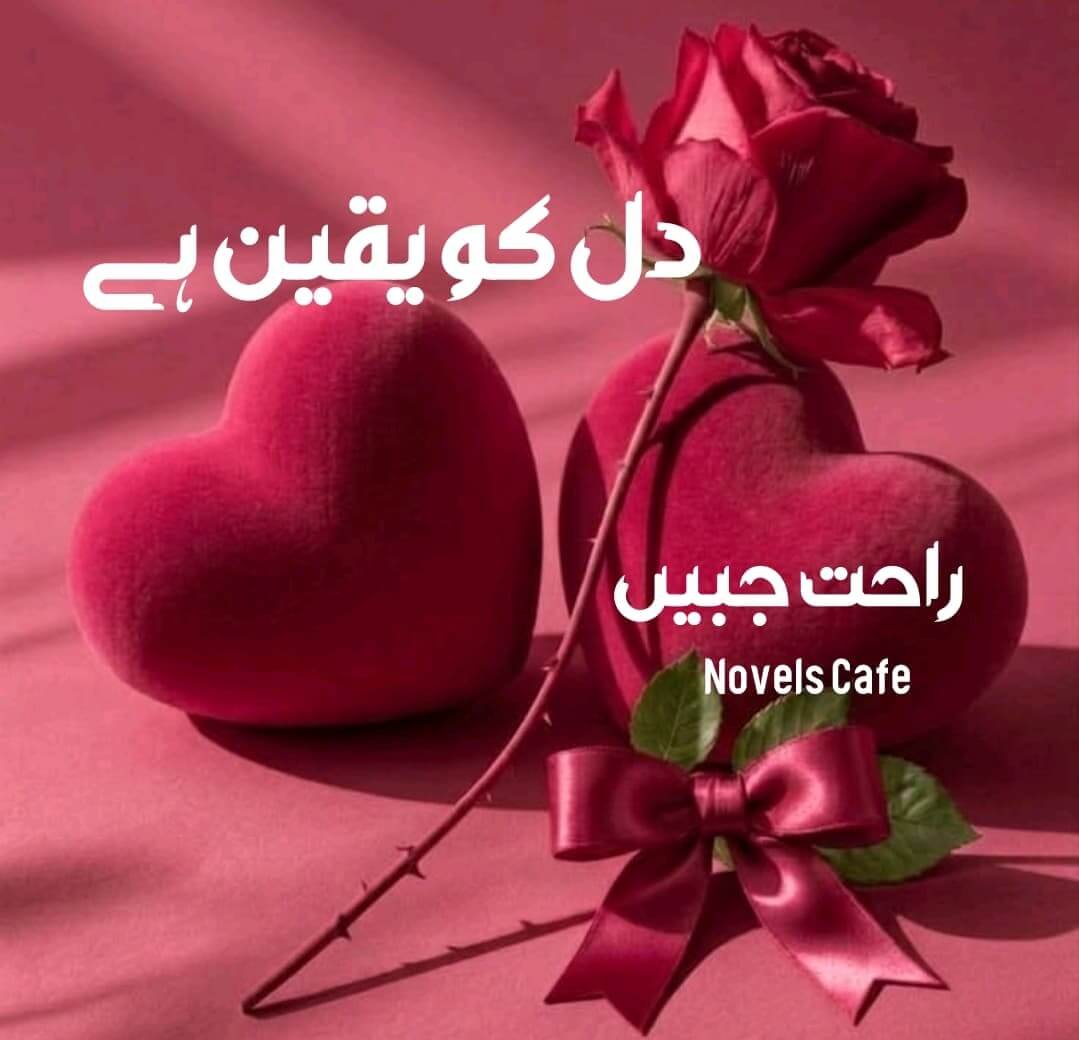
Dil Ko Yaqeen Hai Novel by Rahat Jabin: A Marriage Nobody Remembered
Some promises are made before the people they bind are old enough to understand them. In Dil Ko Yaqeen Hai, Rahat Jabin builds an entire story on one such promise. A boy and a girl are married in childhood, and neither of them knows. The novel appeared in Khawatan Digest in April 2005, and its interest lies in watching what happens when two people slowly learn that their lives were joined long before they met as adults.
A Bond Made Before Either of Them Could Choose
The childhood marriage is the quiet engine of the whole plot. Qurat-ul-Ain is married to her cousin’s son, Nausherwan, while both are too young to know. Because they grow up unaware of it, the relationship is not a burden either of them carries. It simply waits in the background.
That is what makes the premise work. The story does not ask whether such a marriage should have happened. It asks what the two people will do once the truth reaches them. When Nausherwan’s mother finally tells him, he does not take it seriously. For a young man used to living on his own terms, an old family arrangement sounds like a technicality.
Nausherwan, the Boy the Neighbourhood Couldn’t Pin Down
Nausherwan is independent and carefree. He does not get along well with his father, and his easy friendliness around the neighbourhood has earned him a reputation as a wanderer. It is a label people give someone they cannot quite figure out.
His interest in a neighbour named Sajal shows that his heart is already looking elsewhere when the news of his marriage arrives. This matters for the story. He is not an empty slate waiting to be improved. He has his own habits, attachments and assumptions, and the novel has to move him past them without cheating.
His carelessness also reads as a lack of anchoring. A strained relationship with his father and a life spent drifting suggest someone who has never been given much reason to settle. Whatever changes him later will have to be gentle, because force would only confirm his instinct to stay free.
Qurat-ul-Ain and the Strength That Doesn’t Announce Itself
Qurat-ul-Ain’s life is shaped by loss. After her mother’s death, her father pays her little attention, and her aunt raises her. Her childhood is one of deprivation and loneliness, and it makes her quiet and patient.
Her strength is not the loud kind. She does not push back against her circumstances so much as endure them with steadiness. The novel keeps returning to her simplicity, tolerance and strong character, and these are the qualities that eventually reach Nausherwan.
Digest fiction often rewards heroines who suffer, but here her patience is not passive. It becomes a way of seeing clearly, and that clarity is what makes her presence hard for Nausherwan to dismiss.
Two Temperaments, One Slow Turning Point
The contrast between the leads gives the novel its shape. He moves easily and keeps his distance from his own family. She has learned to stay still and make do with very little. He is known across the neighbourhood, and she has grown up largely unnoticed.
Their encounters begin when circumstances bring them together, and Rahat Jabin lets the change in Nausherwan happen gradually. He is not struck by a single revelation. Her simplicity, tolerance and character leave an impression on him a little at a time, until his earlier assumptions no longer hold.
This is the novel’s most convincing movement. Affection does not arrive as a dramatic declaration. It grows through understanding, then trust, and finally acceptance. Nausherwan comes to see that real peace and love may lie in the very relationship his family arranged for him in childhood. That realisation is notable because it reverses his first instinct, which was to treat the marriage as something that did not count.
Reading the Title: What the Heart Is Sure Of
Dil Ko Yaqeen Hai can be read as “the heart is certain.” The summary suggests why the phrase suits this story. The relationship begins without any feeling between the two people, and certainty comes only after Nausherwan has seen who Qurat-ul-Ain really is.
It is a conviction earned through experience, not a first impression. That fits his arc. A man who once drifted, and whose interest was drawn elsewhere, ends by accepting his wife wholeheartedly. The title points to that settled feeling, and the story’s closing note of love and trust bears it out.
A Family Novel in the Digest Tradition
As an Urdu family novel, the story keeps its attention on household bonds: a strained father and son, a motherless girl raised by an aunt, and a marriage decided by elders long ago. These relationships are the real stage, and the romance grows out of them rather than apart from them.
This is also what makes it a good example of a childhood marriage Urdu novel. The premise could easily be treated as a plot device. Here it works as a test of character, showing how a bond that existed on paper becomes real through patience and mutual understanding.
For readers who enjoy digest fiction of this kind, the appeal is its emotional steadiness. The story does not depend on spectacle. It depends on two people slowly learning to see each other.
When Certainty Arrives Quietly
Nausherwan begins as someone who does not take his own marriage seriously and ends as someone who cannot imagine his life without it. Qurat-ul-Ain begins as a girl whom life had largely overlooked and ends as the person who gives that life its calm.
Rahat Jabin’s novel suggests that love need not begin with a spark. Sometimes it begins with a fact no one has told you, and grows once you start paying attention to the person beside you. For readers drawn to Khawatan Digest from April 2005, or to Urdu family fiction more broadly, Dil Ko Yaqeen Hai offers a gentle, character-led story about how trust is built.