
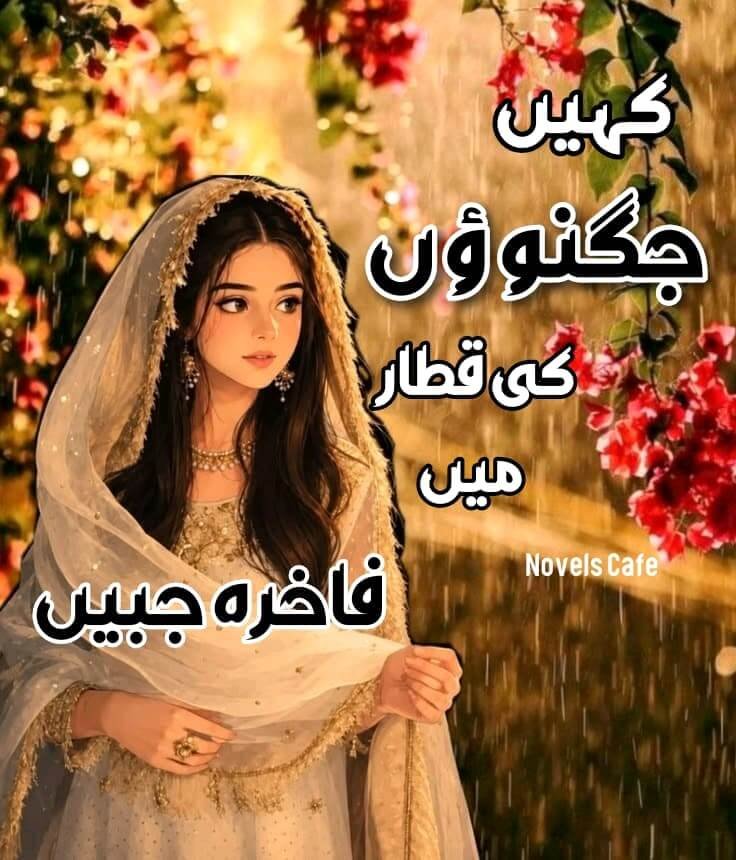
Kahin Jugnuon Ki Qitar Mai: Fakhra Jabeen’s Eid-Season Romance Between Two Nawabi Households
Some stories wait for their plot to turn serious before they earn your attention. Kahin Jugnuon Ki Qitar Mai does the opposite. From its earliest pages it carries the brightness of Eid, and it keeps that mood to the end. Fakhra Jabeen’s novel, published in Shuaa Digest in March 2001, belongs to the tradition of Urdu digest fiction written to be enjoyed. It is a family story about an old marriage proposal, with humour and a light romance running through it.
A Festival Mood Without a Festival Checklist
Many Eid stories lean on rituals and set pieces. This novel is better described as one lit from within by the season. The Eid atmosphere works less as a list of events than as the novel’s temperament: warm, generous and inclined to smile. Readers looking for a heavy marriage drama or an emotional family tragedy will find a different kind of book here. Its pleasure is in how cheerful it is, and it does not apologise for that.
Nawabi Names, Modern Habits
Both leads, Hassan and Sanawar, come from an ancient Nawabi family. That background could have made for a stiff, ceremonious story. Instead, the novel notes that over the years these families have let go of the strictness of old customs and adopted a newer way of living.
This quiet detail shapes the whole tone. The families keep the heritage of their name but have relaxed its rules. Families in that position often feel a gentle tension between pride in the past and comfort in the present. Because they have loosened their grip on tradition, the story can be playful about it instead of reverent. The Nawabi past is a source of memory and connection rather than a set of restrictions, and that choice is what allows the humour to flourish.
Two Grandfathers and a Chance Meeting
The plot turns on a coincidence. The two grandfathers meet unexpectedly at a social gathering, and the encounter stirs old memories. Nothing in the premise suggests grand drama. It is simply two elders recognising a shared history.
Here the grandfathers do the work that younger characters might do in a different kind of novel.
They are the ones who rediscover the link between the families, and they are the ones who decide to renew it. Their meeting also gives the story its sense of continuity. Hassan and Sanawar’s romance begins in what their grandfathers once shared, and the younger generation is invited into a story that was already underway.
A Marriage Settled Between Generations
Having reconnected, the grandfathers resolve to carry forward the marriage of Hassan and Sanawar, in order to strengthen the family bond. The reasoning is relational. The union is meant to bring two households closer, not only to join two individuals.
That framing places the novel firmly in the world of family fiction. Arranged proposals of this kind have a long place in Urdu storytelling, but here the arrangement works as a starting point rather than a conclusion. The decision is made by the elders, and the real interest lies in what the younger pair will do with it. A match chosen for them leaves room for them to meet it on their own terms, and the novel uses that room for comedy.
The First Visit, and the Mischief That Follows
The story then moves from the grandfathers’ table to Sanawar’s house. Hassan goes there for the first time to see her, an occasion that carries its own small nervousness and curiosity. Everything after it is built on that first visit.
What follows is a series of meetings between the two, and the novel describes them in terms that tell us a great deal about its spirit: mischief, lighthearted hints and amusing exchanges. It is worth noticing what is absent from that description. There is no suggestion of grand declarations or dramatic obstacles. The romance grows through teasing and implication, small moments in which neither character is in a hurry to say things plainly.
This is where the novel’s appeal is concentrated. Humour in a romance does more than entertain. It gives the pair a way of getting to know each other that feels spontaneous rather than ceremonial. A relationship that begins as a family arrangement can feel formal, and playfulness softens that. Each meeting adds a little more warmth, and the reader is invited to enjoy the game along with the characters.
Why the Eid Setting Matters to the Romance
It would be a mistake to treat the festive backdrop as decoration. Eid is associated with visiting, gathering and goodwill, and those qualities suit a story in which two families are reuniting and a marriage is being proposed. The season and the plot share the same spirit, which is why the novel feels so consistent in tone. This is a reasonable literary reading rather than a claim about particular scenes, but it helps explain why the cheerfulness never feels forced.
Reading It Today
For readers of classic Urdu digest fiction, Kahin Jugnuon Ki Qitar Mai offers an easy and affectionate way back into the early 2000s, when Shuaa Digest published stories of exactly this kind. It will suit those who prefer warmth to melodrama, who enjoy family-centred plots, and who like their romance seasoned with wit. It also suits anyone curious about how an old Nawabi family background can be handled with a light hand.
The title itself suggests a row of fireflies, small points of light arranged in a line. That is an interpretation, not a plot point, but it fits the way the novel describes itself: a succession of small, bright moments rather than one dramatic blaze.
Where the Fireflies Line Up
Fakhra Jabeen’s novel is built from modest, cheerful ingredients: an old family name, a pair of grandfathers who find each other again, a marriage proposal and a young couple who meet in a spirit of teasing. Together they produce a story that keeps the reader smiling from beginning to end. It does not ask to be taken as weighty literature. It asks to be enjoyed, and on those terms it succeeds. For anyone who wants an Eid-flavoured family romance with humour at its centre, this is a title worth seeking out on a quiet, festive afternoon.
Highlights
– A beautifully written story that keeps readers emotionally invested.
– Realistic characters with meaningful personal growth.
– A balanced blend of romance, family relationships, and life’s challenges.
– Smooth storytelling with engaging and memorable moments.
– Emotional depth that makes the characters easy to relate to.
– A perfect choice for readers who enjoy character-driven Urdu novels.
If you are looking for an Urdu novel that combines heartfelt emotions, engaging storytelling, and memorable characters, Kahin Jugnuon Ki Qitar Mai is a rewarding read that offers both entertainment and an emotionally satisfying experience.