
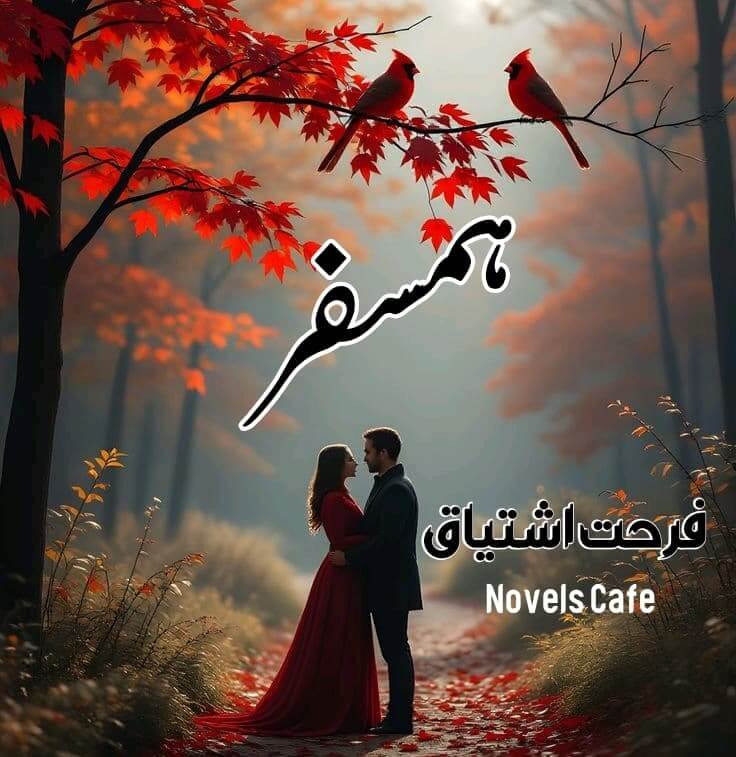
An Introduction to Humsafar
Humsafar by Farhat Ishtiaq is a well-known Urdu family novel originally published in Khawateen Digest from July 2007 to January 2008 in seven episodes. The novel combines marital relationships, family dynamics, emotional conflicts, social differences, and the gradual development of a husband-wife bond.
The narrative revolves around Khirad and Ashar, whose marriage begins without Ashar’s wholehearted acceptance but gradually develops into a meaningful relationship. Their domestic life is later affected by family pressures, misunderstandings, and circumstances that test the trust they have built together.
One of the notable aspects of Humsafar is its focus on relationships within a family rather than romance alone. The novel also explores how insecurity, social expectations, personal decisions, and interference from others can influence a marriage.
The novel was later adapted into the highly successful television drama Humsafar, which introduced the story to an even wider audience. For readers interested in classic Urdu digest fiction, the original novel offers an opportunity to experience Farhat Ishtiaq’s narrative in its original written form.
Publication Snapshot
Novel : Humsafar
Writer: Farhat Ishtiaq
Publication : Khawateen Digest
Published : July 2007 – January 2008
Episodes : 7
Category : Urdu Family Fiction
Focus : Marriage, Family Relationships, Trust & Social Differences
Ending: Happy Ending
Adaptation: Later adapted into a television drama
Love Under Siege: A Review of Humsafar
Author: Farhat Ishtiaq | Serialized in: Khwateen Digest, July 2007 to January 2008
Spread across seven installments, Humsafar is a family drama that blends tender romance with real heartbreak. Its television adaptation became a huge hit, so many readers will arrive already knowing the broad outline. The novel, though, opens differently from the screen version and rewards a fresh read.
The book begins with Khirad walking into Ashar’s office, introducing herself as the mother of a sick little girl, Hareem. She shows him medical reports and asks for money toward the child’s treatment. From there the narrative slips back five years.
Khirad and Ashar marry because their elders wish it: her mother and his father, Baseerat Hussain, are siblings. Ashar enters the marriage reluctantly, yet gradually warms to his wife and falls for her. He pays attention to her small joys and enrolls her at university when he sees her enthusiasm for study. That decision opens the door to a turn of events in which someone, chasing selfish gain, sets fire to the home the couple built together.
Ashar is the novel’s emotional anchor: thoughtful and perceptive, he dissolves Khirad’s insecurities with open, devoted affection. Ironically, a trap laid by his own mother leaves him unable to face his wife and young daughter.
Khirad, a proud, bright, modest girl from a lower-middle-class home, wins his heart through sheer sincerity. When her faith in him collapses, she hardens into stone, caring about nothing but Hareem’s recovery.
Sara, Ashar’s cousin, mistakes obsession for love and forgets that real love demands sacrifice. Khizar appears only briefly, yet he is a deliberate piece in someone’s scheme. Fareeda Begum prizes social status above all and treats her daughter-in-law as an unwanted guest, forgetting that a bond between husband and wife does not depend on class.
With an enchanting narrative voice, vivid scenery, memorable characters and a satisfying ending, this is a rich, emotional read. Do not miss it.
Verdict: Heartfelt, tragic and beautifully crafted.
Character Study
Ashar
Ashar is presented as an intelligent and observant man whose personality carries both confidence and emotional complexity. Although he initially approaches his marriage with reluctance, his attitude changes as he spends more time with Khirad. His affection becomes visible through his attention to her interests and his efforts to make her comfortable. At the same time, his inability to recognize the truth when his own family manipulates circumstances becomes one of the most consequential weaknesses in his character.
Khirad
Khirad is portrayed as a self-respecting young woman from a modest background who values sincerity and dignity. Her reserved nature does not make her emotionally weak; rather, she possesses considerable inner strength. Her faith in Ashar gives their relationship depth, which is why the collapse of that trust affects her so profoundly. Motherhood later becomes an important part of her identity and priorities.
Fareeda Begum
Fareeda Begum represents the influence of social status and personal prejudice within a family. Her expectations regarding her son’s marriage are shaped by class-consciousness and her own preferences. Her attitude toward Khirad creates a significant imbalance in the household and contributes to several of the novel’s major conflicts.
Sara
Sara is an emotionally driven character whose attachment to Ashar develops into an intense desire to have him in her life. Her perspective on love is influenced more by possession and personal longing than by acceptance or sacrifice, making her actions an important source of tension.
Khizar
Although Khizar has a relatively limited presence, his involvement becomes significant because he is deliberately brought into the circumstances surrounding Khirad and Ashar. His role demonstrates how a carefully constructed plan can have consequences far beyond the person directly involved.
Marriage & Family Dynamics
One of the strongest aspects of Humsafar is the way it examines a marriage within a complicated family environment. Khirad and Ashar’s relationship is not shaped by their feelings alone; the expectations, attitudes, and decisions of people around them repeatedly influence their domestic life.
Ashar’s position within his family gives him a different social experience from Khirad. This difference becomes particularly important because Khirad enters the household with her own values, dignity, and expectations. Instead of presenting these differences as a simple husband-wife disagreement, the novel connects them with the wider family structure.
The relationship between a daughter-in-law and her husband’s family is another significant element. Khirad’s experiences demonstrate how preconceived opinions can affect the way a woman is treated within her marital home, particularly when social status becomes more important than personal character.
The novel also highlights the consequences of making serious marital decisions without direct communication. When assumptions replace conversation, even a strong relationship can become vulnerable to outside influence.
Ultimately, Humsafar presents family life as a space where affection, authority, expectations, and personal choices constantly interact. The challenges faced by Khirad and Ashar therefore become part of a much wider examination of trust and responsibility within marriage.
Writing Style & Literary Appeal
Farhat Ishtiaq’s writing in Humsafar places considerable emphasis on emotional development and interpersonal observation rather than relying only on major plot events. The narrative gives space to the characters’ reactions, making their changing attitudes easier to follow.
One notable feature is the balance between domestic scenes and emotional tension. Ordinary conversations, family interactions, and personal decisions gradually contribute to the larger conflict. This gives the story a grounded quality while allowing the relationship between Khirad and Ashar to remain central.
The narrative also uses contrast effectively. Moments of warmth within the marriage stand against periods of uncertainty and separation, creating a noticeable shift in the emotional atmosphere as the story progresses.
Another appealing element is the character-focused narration. Instead of treating the supporting cast merely as background figures, the novel gives their motivations and choices a meaningful role in shaping the circumstances around the central couple.
The result is a relationship-driven narrative in which family situations, personal emotions, and individual decisions work together to move the story forward.
Novel and Drama: A Different Reading Experience
Humsafar is particularly interesting for readers who have already watched its television adaptation. Although the central characters and major relationship remain familiar, reading the original novel provides a different way of experiencing the story.
The novel allows the reader to follow the narrative through written descriptions, conversations, character reactions, and internal emotions. Television, on the other hand, communicates much of the same material through performances, expressions, locations, music, and visual presentation.
The opening of the novel is also notably different from the familiar television presentation. Khirad’s appearance before Ashar as “Umme Harem” establishes a mystery around her identity and immediately raises questions about the circumstances that brought her back into his life.
For readers who know the drama, returning to the original text can therefore reveal details and narrative choices that may feel different from the screen version. It also provides an opportunity to experience Farhat Ishtiaq’s original storytelling rather than viewing the story solely through its television adaptation.
Final Verdict
Humsafar remains a notable example of relationship-focused Urdu fiction in which marriage, family expectations, social differences, and personal choices intersect. Its strength lies in the gradual development of Khirad and Ashar’s relationship and the consequences that emerge when trust is placed under pressure.
The novel also gives supporting characters enough influence to make the family environment feel central to the narrative rather than merely serving as a background. The emotional progression, shifting relationships, and eventual resolution give the seven-episode work a complete narrative arc.
For readers interested in classic Urdu digest literature, family-centered fiction, marriage-based narratives, and character-driven storytelling, Humsafar is a worthwhile read—especially for those who know the television adaptation and want to experience Farhat Ishtiaq’s original written work.
Frequently Asked Questions
Who wrote Humsafar?
Humsafar was written by Pakistani Urdu fiction writer Farhat Ishtiaq.
In which digest was Humsafar published?
The novel was originally published in Khawateen Digest.
When was Humsafar published?
It was published from July 2007 to January 2008.
How many episodes does Humsafar have?
The novel consists of seven episodes.
What type of novel is Humsafar?
It is primarily a family and relationship-based Urdu novel, with elements of romance, marital conflict, social differences, and emotional drama.
Who are the main characters in Humsafar?
The central characters are Khirad and Ashar. Other important figures include Fareeda Begum, Sara, Khizar, and Hareem.
Is Humsafar a marriage-based novel?
Yes. The development of Khirad and Ashar’s marriage forms the central relationship around which many of the novel’s major events unfold.
Is Humsafar a family novel?
Yes. Family relationships and their influence on the lives of the main characters are an important part of the narrative.
Does Humsafar have a happy ending?
Yes. The novel concludes with a positive and emotionally satisfying resolution.
Was Humsafar adapted into a drama?
Yes. The novel was later adapted into the highly successful Pakistani television drama Humsafar, which brought the story to a much wider audience.
Is Humsafar worth reading after watching the drama?
Yes. Readers who have already watched the drama can still find the original novel worthwhile because the written version presents the narrative through Farhat Ishtiaq’s original prose, descriptions, and character-focused storytelling.
About the Author – Farhat ishtiaq
This Amazing novel written by Acclaimed Writer Farhat ishtiaq.To Explore her Profile and Her Complete Novel List plz visit page
Browse Farhat ishtiaq Profile and Her Complete Novels Collection