
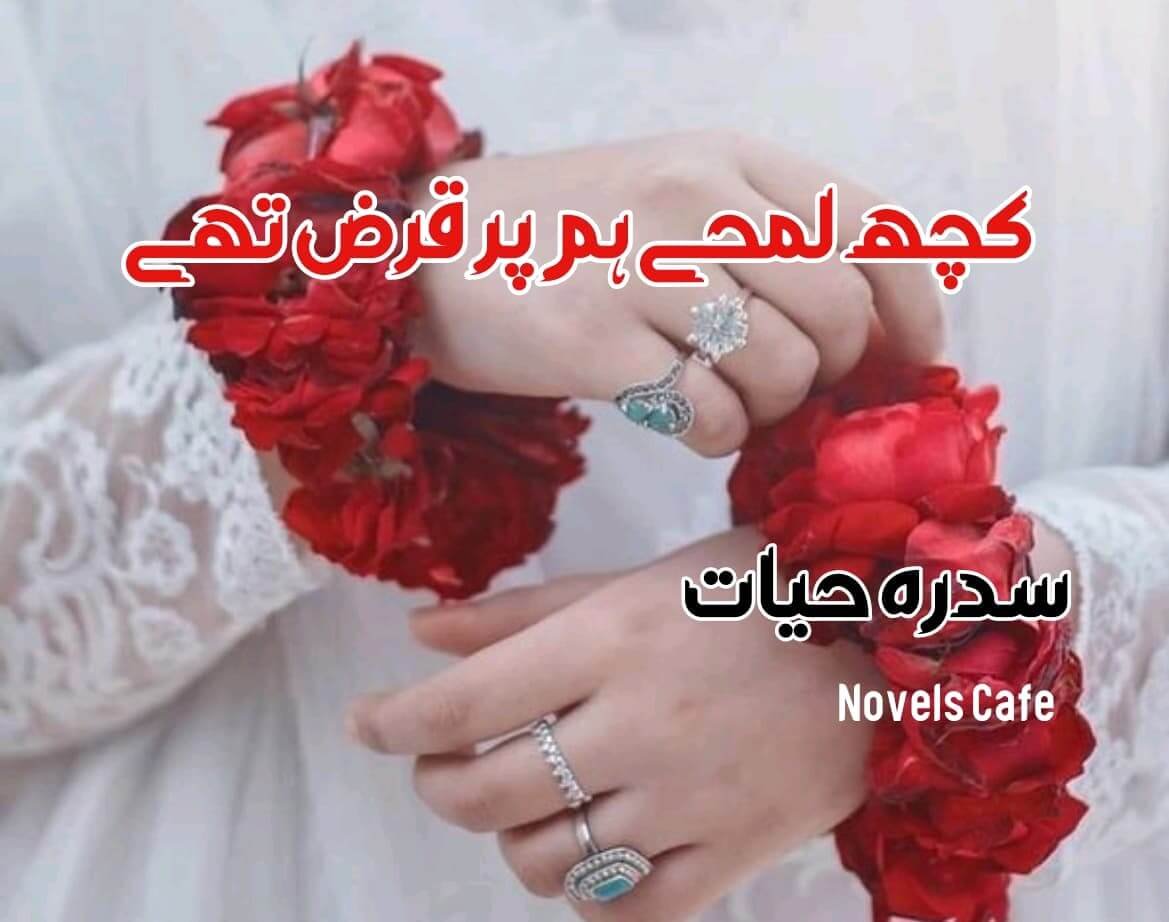
Novel: Kuch Lamhay hum pr qarz thay
Writer: Sidra Hayat
Published in: Kiran Digest January – February 2020
Status: Complete Novel
Pages:90
Genre: Family Based| Love Story 💞
File Format: Pdf (Online)
Kuch Lamhay Hum Par Qarz Thay by Sidra Hayat: A Love Story Built on Trust
Some debts never appear in a ledger. They are the moments we owe to people we love: a conversation we postponed, a doubt we should have voiced, a trust we should have extended. Kuch Lamhay Hum Par Qarz Thay by Sidra Hayat, published in Kiran Digest in January–February 2020, takes its emotional weight from this idea. It is a romantic Urdu novel in which love is tested less by distance or rivalry than by suspicion, silence and the pull of family obligations.
Friendship First, Feelings Later
The story begins in a university setting, where Momi Gul and Ilyan are classmates. Their bond does not arrive with fanfare. It grows from shared time and familiarity until liking becomes something more serious. Many love stories hurry past this stage, but here it matters. The affection between Momi Gul and Ilyan is rooted in ordinary acquaintance, which makes it feel earned. When trouble arrives, we understand what is at stake because we have seen how the relationship formed.
Family adds a second layer. Their fathers are business partners, so the match seems natural to everyone involved. In many family-based love stories, a relationship approved by both households is the safest of all. This novel quietly questions that assumption. When two families share money as well as affection, a problem in one area can easily spread into the other.
When the Wedding Falters
That is exactly what happens. As the marriage approaches, Ilyan’s father refuses to go ahead, citing allegations of dishonesty in business. The novel does not need to dwell on the technicalities, and it is better read as an emotional turning point than as a financial plot. For Momi Gul and Ilyan, the refusal changes everything. A relationship that had the blessing of both families is suddenly cut off by a decision made on grounds that have little to do with the two of them.
This is where the novel’s central themes take shape. The young couple’s feelings are real, but they are not the only forces at work. Trust between business partners, once shaken, can cost the next generation its happiness. The story presents this as a fragile-relationships drama in which personal love and family credibility are tangled together, and where one accusation can undo years of closeness.
Another Kind of Love: Momi Gul and Her Aunt
Had the novel followed only the broken engagement, it would have been a sad but familiar romance. The second thread gives it more range. Momi Gul has a deep attachment to her aunt, who does not wish to marry. The story gives us a heroine who loves not only a man but the people in her family, and who worries about their futures as much as her own.
Out of that concern, Momi Gul goes to a marriage bureau to look for a suitable match for her aunt. The scene is notable because it reverses her position. In her own life, a marriage was arranged and then withdrawn. Now she is the one searching on someone else’s behalf, hoping for a good outcome for a person she cares about. Her care for her aunt reveals a generous, active side of her character that is separate from her romance with Ilyan.
The Meeting With Arham
At the marriage bureau, Momi Gul meets Arham. On its own this might look like an incidental encounter, something that simply happens during a family errand. The author uses it as the hinge of the plot. Arham turns out to be Ilyan’s younger brother, and with that discovery the two storylines, which had seemed to run on separate tracks, meet.
This is the most interesting structural choice in the novel. A heartbreak narrative and a family-concern narrative could easily have remained apart. Because Arham links them, a quiet errand for the sake of an aunt brings Momi Gul back into the orbit of the family that withdrew from her. The coincidence is the kind that romantic fiction often relies on, but it does real work here. It reopens a closed chapter and gives the characters a chance to see their past differently.
Misunderstanding as a Driving Force
What gives the later developments their emotional pull is the weight of unspoken things. The refusal of Ilyan’s father left questions unanswered. As the new connection brings these people back into contact, those unresolved moments come back with them. The title becomes meaningful at this stage, since the “moments” of the story are the ones that were left unpaid: explanations not given, trust not offered, conversations not had.
The novel reminds us that misunderstandings rarely stay small. They affect how people see one another and how families treat each other, and they shape choices for years. Fiction about love and betrayal often works best when it shows how ordinary human hesitation, rather than villainy, produces heartbreak, and this novel follows that approach.
What Makes the Story Appealing
Several qualities make the story engaging for readers of emotional romantic fiction:
- A grounded beginning. The university friendship feels natural rather than staged.
- Two connected storylines. The romance and the aunt’s story are separate concerns that eventually meet.
- Family at the centre. Fathers, a brother and an aunt shape the plot as much as the lovers do.
- A restrained surprise. The link between Ilyan and Arham reorients the story without overwhelming it.
Readers who enjoy the family-based love story tradition in Urdu digests will find familiar comforts here: loyalty, sacrifice, soft humour of relationships and an emotional pace suited to serialised reading. They will also find a theme that gives these comforts some substance, which is the cost of mistrust.
Moments Repaid
The story reaches a happy ending, which is fitting for a novel so concerned with what people owe one another. The pleasure for readers lies in discovering how the characters get there, so the details are best left to the novel itself. What can be said is that the resolution answers the questions the story raises: whether trust can be rebuilt, whether love can survive a family’s doubts, and whether an unexpected connection can lead people back to what they thought they had lost.
Kuch Lamhay Hum Par Qarz Thay suggests that some moments, once missed, can still be honoured, and that affection patient enough to wait and honest enough to forgive can settle even the oldest debts. For readers who value emotional depth in romantic Urdu fiction, Sidra Hayat’s novel is a thoughtful and rewarding read.