Khwateen Digest: The Magazine Pakistani Women Grew Up With
A Familiar Name in Urdu Households
Few magazines in Pakistan have the kind of loyalty Khwateen Digest enjoys. It isn’t just something people pick up at a newsstand. In many homes it arrives every month like a regular guest, passed from mothers to daughters, swapped between neighbours, and read in the quiet hours after the housework is done. For a lot of readers, a new issue is a small event.
How It All Began
The digest was launched in April 1972 by Mahmood Riaz. At the time, English readers had Reader’s Digest and Urdu readers had Urdu Digest, but nothing existed that spoke directly to women. The idea was simple: a pocket-sized monthly, easy to carry and easy to finish, filled with the sort of writing women actually wanted to read. It worked, and it is widely regarded as the pioneer of the women’s digest format in Pakistan.
What You Find Inside
Fiction sits at the centre of every issue. There are short stories, novelettes and serialized novels, and sometimes a complete novel is printed in a single issue. Serials are a big part of the appeal, since readers follow the same characters across months and spend the time in between guessing what happens next.
Beyond fiction, the pages make room for poetry, recipes, home and beauty tips, and articles on women’s concerns such as family life and relationships. A letters section lets readers speak up, argue with a story, or praise a favourite writer, which gives the magazine the feel of a shared conversation rather than a one-way broadcast.
The Style That Keeps Readers Coming Back
Khwateen Digest doesn’t try to sound academic. The language is plain and warm, and the stories deal with situations most readers recognise: in-law tensions, marriage proposals, sibling bonds, money worries, small betrayals and quiet acts of kindness. Characters feel like people from the next street, which is a big reason readers connect with them so easily.
Circulation and Reach
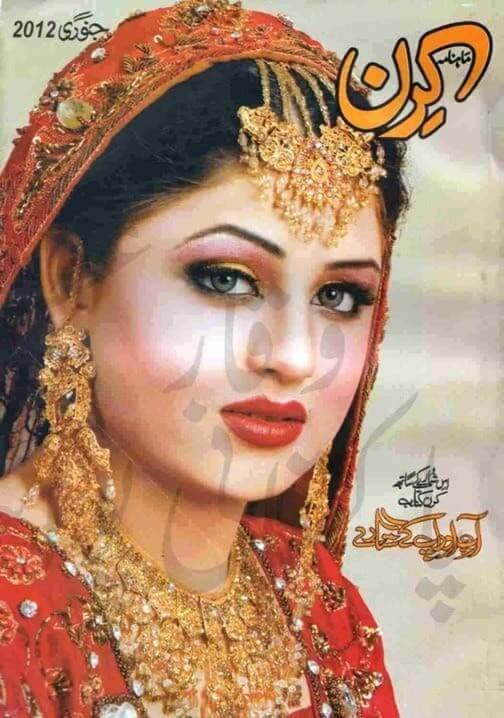
Pakistan’s book market is small, and a title that sells a thousand copies is often considered a success. Against that background, digests like Khwateen Digest, Pakeeza, Shua and Kiran have reported print runs in the hundreds of thousands, with copies reaching Urdu-speaking communities around the world. Few literary publications in the country can claim that kind of reach.
The magazine’s editor-in-chief, Aamer Mehmood, has acknowledged that holding on to readers has become harder with so many entertainment options competing for attention. His answer was to keep raising the quality of the content, and he has maintained that the magazine’s circulation has kept growing despite the rise of television channels.
A Launchpad for Writers
Digests have long been a first stop for aspiring women writers. Seeing your first story in print, with your name on it, is a powerful moment, and many authors who later became household names started out in magazines like this. By giving newcomers space alongside established writers, Khwateen Digest has helped shape a whole generation of Urdu storytelling and kept the habit of reading alive among women who might otherwise have drifted away from books.
Holding Its Ground in the Digital Age
It would be easy to assume that a paper magazine can’t survive in the age of smartphones, yet many readers still prefer the feel of a printed issue. Turning pages, flipping ahead to find the next episode of a serial, and reading with a cup of tea is a pleasure that a scrolling screen doesn’t quite match. At the same time, the digital world has opened new doors, and online access allows readers abroad or far from a bookstall to keep up with their favourite stories.
Final Thoughts
Khwateen Digest has spent more than five decades as part of everyday life for countless Pakistani families. It gave women a magazine made with them in mind, offered new writers a place to be heard, and turned monthly reading into a habit that many people still cherish. Whether someone admires it or questions it, its influence on Urdu popular culture is hard to dispute.
Read PDF Online
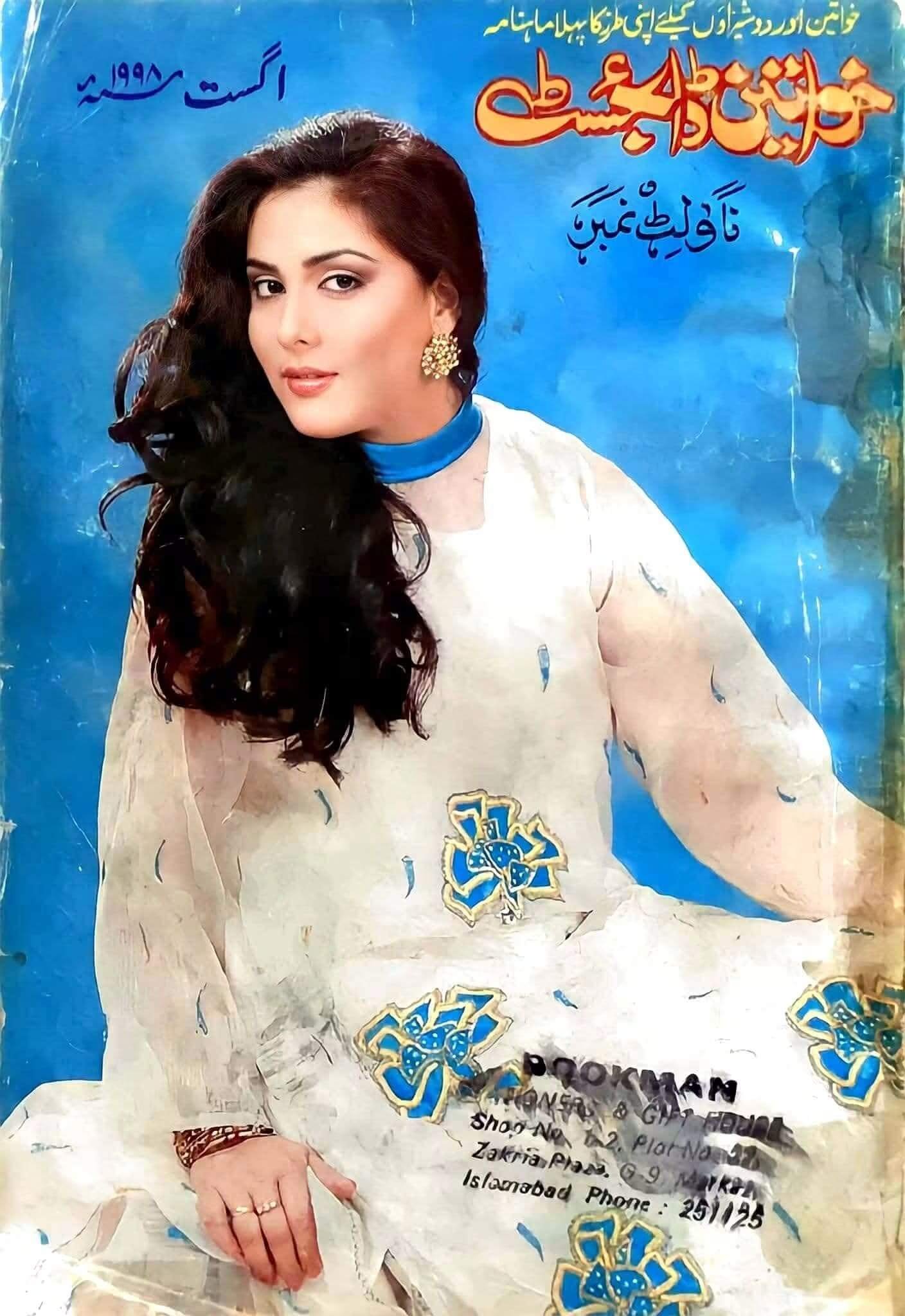
Khwateen Digest August 1998 Content List
1. General Sections & Articles:
Kehni Sun-ni: Mahmood Riaz
Hamare Naam: Nadra Khatoon
Aap Se Kya Parda: (Section)
Ek Do Kahaniyan: Ibn-e-Insha
Khatoon Ki Diary: (Section)
Meri Diary Se: Amat-ul-Sabooh
Tujh Se Milay: (Section)
Baatein Urooj Niaz Se: Shaheen Rasheed
Inam-e-Urooj: (Section)
Marvi Se Mulaqat: Shaheen Rasheed
Kaliyan Aur Shagofe: Amat-ul-Sabooh
Khabrein Aur Khabrein: Saira Ghulam Nabi
Yoga, Ek Ta’aruf: Rabia Bilal
2. Novels (ناول):
Taer-e-Lahooti: Riffat Siraj
Dil Phoolon Ki Basti: Nighat Abdullah
3. Mukammal Novel (مکمل ناول):
Rim Jhim Barsa Mausam: Nighat Abdullah
4. Novelette (ناولٹ):
Dil Isse Dhoond Laya Hai: Asiya Razaqi
Sabz Khayalon Ka Jazeera: Shazia Chaudhry
Ae Dasht-e-Zindagi: Saima Manaf
Khayal-o-Khwab Ka Alam: Afshan Afridi
Shisha Sifat Na Kar: Maimoona Khushnood
5. Afsane (افسانے):
Dard-e-Mushtarak: Humaira Rahat
Khwabon Ki Chheen: Nuzhat Shahan Javed
Dil Andar Ke Bhed: Zakiya Bano Bilgrami