Khwateen Digest The Magazine For Novel Digest Lovers
- Magazine Name: Khwateen Digest
- Founder Name: Mehmood Riaz
- First Magazine Start: April 1972
- Language: Urdu
The Style That Keeps Readers Coming Back
In Urdu fiction, the way a writer presents emotions, family relationships, misunderstandings, and personal choices can make a narrative memorable. Khwateen Digest belongs to this wider storytelling tradition, where readers may become attached to fictional characters and remain curious about the decisions they will make next. For some, the attraction lies in emotional scenes; for others, it is the gradual development of relationships or the way a difficult situation reaches its conclusion.
Circulation and Reach
The journey of a printed magazine depends on more than the content inside its pages. Availability at bookshops, distribution to different areas, recommendations between readers, and the popularity of particular writers can all influence how far a publication travels. Monthly digests have historically served readers who wanted regular access to Urdu fiction without purchasing separate books for every story. Khwateen Digest can be explored within this publishing tradition by examining its surviving issues, publication details, and evidence of its readership over time. Exact circulation figures should only be mentioned when supported by trustworthy records. This approach provides a more accurate account than repeating numerical claims whose original sources cannot be identified.
A Launchpad for Writers
For a fiction writer, seeing a story published in a magazine can be an important step in sharing creative work with a wider audience. Digest publications offer a format in which short stories can stand independently, while longer novels can unfold gradually across several issues. This gives readers time to become familiar with characters and gives writers room to develop complicated plots. Khwateen Digest is worth examining as part of the publishing environment that connects Urdu authors with magazine readers. To understand its contribution accurately, it is useful to identify writers whose work appeared in specific issues and distinguish between authors who were already established and those whose early work was published there. Such details can make a literary article more informative and historically valuable.
Holding Its Ground in the Digital Age
The way people discover Urdu literature has changed with the arrival of websites, digital reading platforms, and social media communities. A reader who once searched for a printed issue may now look for information about a novel, its author, its publication date, or the magazine in which it appeared. This shift creates an opportunity to preserve publication history and introduce older works to readers who did not experience them when they were first released. For Khwateen Digest, the digital era can be discussed through the changing habits of Urdu readers and their continuing interest in magazine fiction. Accurate issue details, original literary commentary, and properly authorised digital material can help keep this reading heritage accessible while respecting copyright.
Final Thoughts
Khwateen Digest offers an interesting subject for anyone exploring the relationship between Urdu fiction and everyday reading culture. Its story can be examined through the novels and short stories associated with its issues, the writers who contributed to its pages, and the readers who followed its publications. Looking at individual issues also helps reveal how storytelling interests and publishing practices have changed over time. Rather than describing every digest in the same way, a meaningful account should focus on details that belong specifically to Khwateen Digest. Verified historical information, careful attention to individual publications, and original observations can turn a general introduction into a useful literary resource for Urdu readers.
Read PDF Online
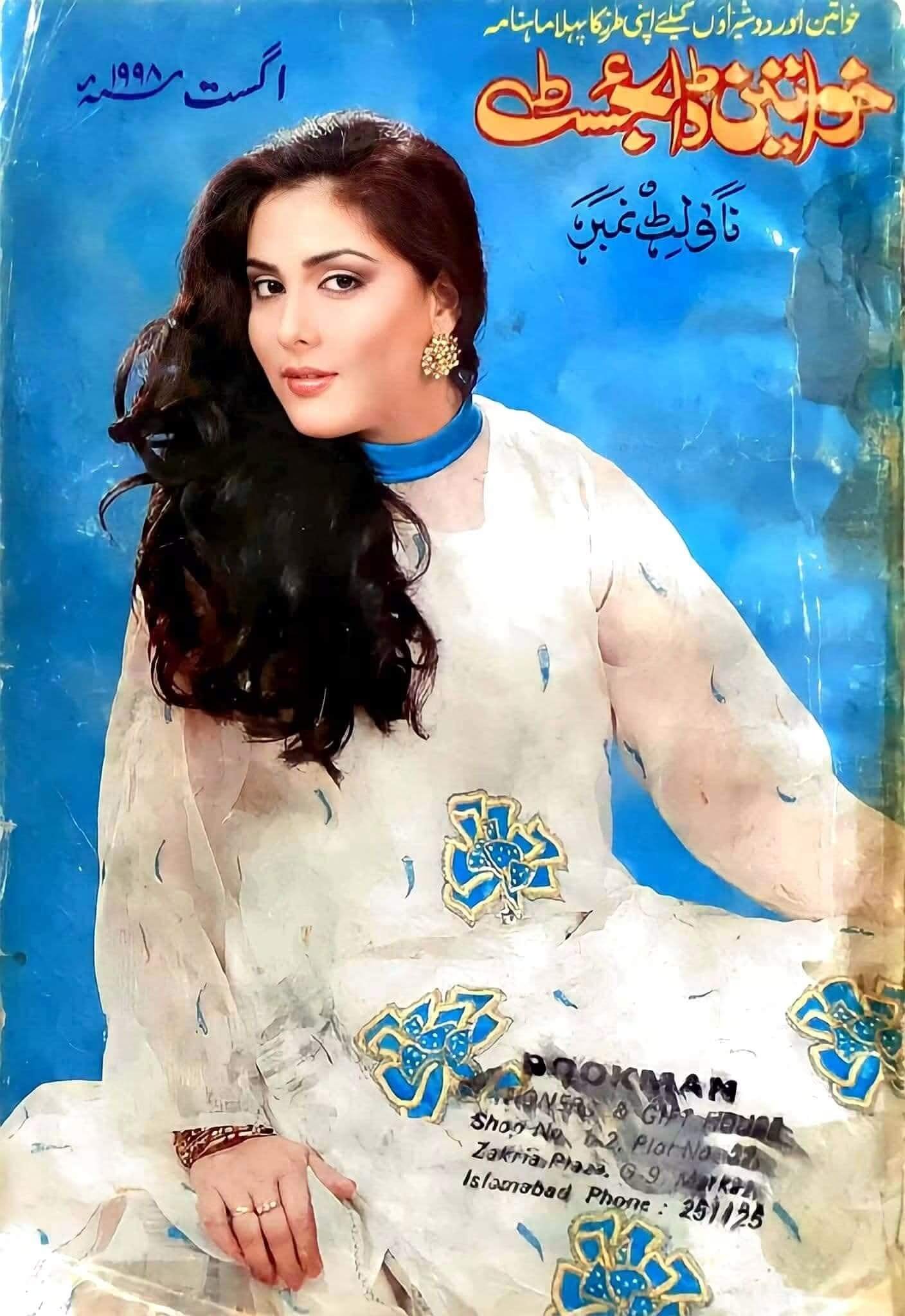
Khwateen Digest August 1998 Content List
1. General Sections & Articles:
Kehni Sun-ni: Mahmood Riaz
Hamare Naam: Nadra Khatoon
Aap Se Kya Parda: (Section)
Ek Do Kahaniyan: Ibn-e-Insha
Khatoon Ki Diary: (Section)
Meri Diary Se: Amat-ul-Sabooh
Tujh Se Milay: (Section)
Baatein Urooj Niaz Se: Shaheen Rasheed
Inam-e-Urooj: (Section)
Marvi Se Mulaqat: Shaheen Rasheed
Kaliyan Aur Shagofe: Amat-ul-Sabooh
Khabrein Aur Khabrein: Saira Ghulam Nabi
Yoga, Ek Ta’aruf: Rabia Bilal
2. Novels (ناول):
Taer-e-Lahooti: Riffat Siraj
Dil Phoolon Ki Basti: Nighat Abdullah
3. Mukammal Novel (مکمل ناول):
Rim Jhim Barsa Mausam: Nighat Abdullah
4. Novelette (ناولٹ):
Dil Isse Dhoond Laya Hai: Asiya Razaqi
Sabz Khayalon Ka Jazeera: Shazia Chaudhry
Ae Dasht-e-Zindagi: Saima Manaf
Khayal-o-Khwab Ka Alam: Afshan Afridi
Shisha Sifat Na Kar: Maimoona Khushnood
5. Afsane (افسانے):
Dard-e-Mushtarak: Humaira Rahat
Khwabon Ki Chheen: Nuzhat Shahan Javed
Dil Andar Ke Bhed: Zakiya Bano Bilgrami